English
 русский
 عربى
Additive manufacturing powder looks simple from a distance: fine metal particles, a hopper, a build plate, and a finished part. Up close, it is a carefully controlled engineering material. Particle shape, size distribution, oxygen content, chemistry, and lot-to-lot consistency all influence whether a build runs smoothly or turns into a costly experiment.
In our work with alloy powders and surface engineering, the most useful conversations are rarely about a single “best” powder. They are about fit: what the process needs, what the part must survive, and what the powder supplier can repeatably deliver. If you want a broader refresher on alloy powder types and selection, our alloy powder guide walks through the basics. This article stays closer to the day-to-day questions: what the powder has to do inside a printer, why two powders with the same chemistry can behave differently, and how to choose a grade without over-specifying it.
Content
- 1 What makes a good additive manufacturing powder?
- 2 How metal powders for additive manufacturing are made
- 3 The main alloy powder families
- 4 Powder properties that shape print quality
- 5 Matching powder to the process
- 6 Reuse, handling, and quality control
- 7 A practical selection checklist
- 8 From powder specification to production reality
What makes a good additive manufacturing powder?
A good additive manufacturing powder has to do more than carry the right chemical composition. In laser powder bed fusion or electron beam melting, a recoater spreads a thin layer across the build area. That layer must be uniform, loosely packed, and free of agglomerates. The powder then absorbs energy, melts, and solidifies quickly. Any inconsistency in the layer can become porosity, lack of fusion, or a surface defect.
That is why powder specification is not just a chemistry certificate. It combines alloy grade, particle size distribution, morphology, apparent density, tap density, flow behavior, oxygen content, moisture, and contamination control. A powder that performs well in a coating torch may be unsuitable for a fine-layer printer, and a powder that prints beautifully in one machine may struggle in another with a different recoater, laser spot, or layer thickness.
How metal powders for additive manufacturing are made
Most metal powders for additive manufacturing begin with melting and atomization. Gas atomization is common for high-value and reactive alloys because it can produce rounded particles with controlled surface chemistry, although the result still depends on nozzle design, gas flow, melt superheat, and cooling rate. Water atomization is often more economical and tends to produce irregular particles; those may suit binder jetting, pressing, or other routes where flow and packing requirements differ. Plasma spheroidization can round irregular feedstock, but it adds cost and is usually reserved for cases where morphology matters enough to justify it.
The production method shapes the powder’s personality. Gas-atomized powder often has good flow and a high packing density, but it can contain satellite particles and fines that need control. Water-atomized powder may have a rougher surface and higher oxygen pickup. The point is not to rank methods in the abstract. It is to match the powder-making route to the process, the alloy, and the acceptance criteria that matter for the final part.
The main alloy powder families
Different alloy families solve different problems. The quick comparison below is a starting point for technical discussions, not a substitute for qualification testing.
| Powder family | Typical strengths | Common use direction | Selection watch-outs |
|---|---|---|---|
| Nickel-based and nickel-cobalt | Corrosion resistance, high-temperature strength, good toughness in many grades | Hot-section parts, chemical equipment, wear and corrosion protection | Oxygen control, cracking sensitivity, chemistry consistency |
| Cobalt-based | Wear resistance, hot hardness, corrosion resistance | Valve parts, pump components, hardfacing, wear-prone surfaces | Carbon and boride balance, ductility, machining response |
| Iron-based and steel | Cost-effective, broad property range, useful hardenability | Industrial parts, tooling, repair, structural components | Carbon control, oxygen pickup, distortion after processing |
| Copper-based | High thermal and electrical conductivity | Heat-transfer parts, electrical contacts, induction components | Laser reflectivity, process window, porosity risk |
| Titanium and aluminum | Low density, corrosion resistance, good strength-to-weight ratio | Lightweight structures, aerospace, medical and transport parts | Reactivity, oxide control, powder handling safety |
| Carbide-reinforced powders | High hardness and abrasion resistance | Wear parts, cutting and drilling surfaces, protective layers | Reinforcement uniformity, toughness trade-off, process compatibility |
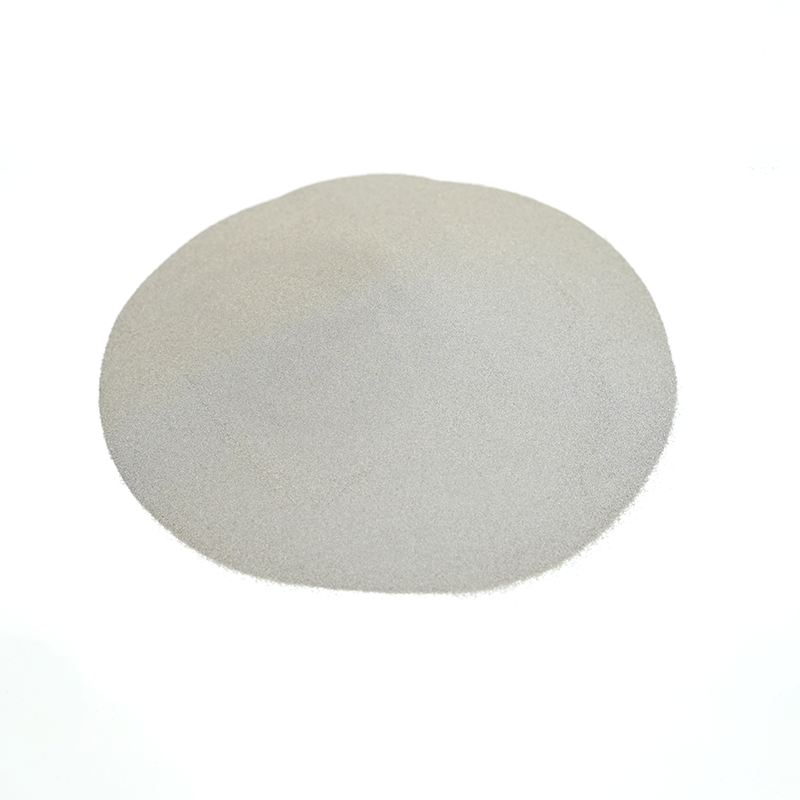
Nickel-based powders are often the first choice when a part must combine heat resistance with corrosion resistance. Nickel-cobalt grades push toward higher-temperature or more demanding service, but they also ask more of the process window. A nickel-based metal powder can be a practical starting point for both additive manufacturing and advanced surface work, provided the grade, size cut, and oxygen level are agreed against the actual process.
 Nickel-Based Metal Powders for Hardfacing and Additive ManufacturingNickel-matrix alloy powders with selectable hardness and corrosion resistance for hardfacing, thermal spray, cladding, powder metallurgy and 3D printing.View Product →
Cobalt-based powders are a different kind of tool. They are less about general-purpose structure and more about wear, hot hardness, and resistance to aggressive contact. In practice, that makes them relevant to valve seats, pump parts, hardfacing, and other surfaces where abrasion is the enemy. The balance between carbon, carbide formers, and matrix toughness matters, especially when the same alloy may be used for a printed part and for a coating.
 Cobalt-Based Alloy Powders for Wear and High-Temperature ServiceCobalt-dominant hard alloy powders with Cr and W for valve seats, extrusion dies and overlays requiring wear, corrosion and oxidation resistance at high temperature.View Product →
Iron-based powders offer a wide property range and often a more favorable cost position. Copper-based powders are attractive for thermal and electrical duties, but their reflectivity and thermal conductivity can make laser processing less forgiving. Titanium and aluminum powders demand careful atmosphere and handling control because of reactivity and oxide sensitivity. None of these families is universally “better”; the right choice follows the failure mode you are trying to prevent.
Powder properties that shape print quality
When a build fails, the powder is not always the cause, but it is often part of the story. These are the characteristics worth reviewing before a trial or a production release:
- Particle size distribution: Fine particles can improve surface detail but increase flow difficulty and oxygen pickup. Coarse cuts can spread well but may reduce resolution or melting efficiency.
- Morphology: Rounded particles usually flow and pack better. Irregular particles can be useful in other processes but may bridge or spread unevenly in a recoater system.
- Flow and packing density: Good flow helps a uniform layer form. Apparent and tap density influence how much material is available in a given layer volume.
- Oxygen and moisture: Both can affect wetting, porosity, and final chemistry. The acceptable limit depends on alloy and process, so a single number should not be applied everywhere.
- Satellites and agglomerates: Small particles fused to larger ones can disturb spreading and create local defects. Their presence should be measured, not judged by eye alone.
- Contamination and traceability: Powder should be traceable by lot, stored properly, and checked for foreign material. Good documentation is part of the material’s performance.
Matching powder to the process
Laser powder bed fusion usually calls for a relatively fine cut, often in the 15–45 µm range depending on the machine and layer thickness. Electron beam melting tends to use coarser powder because the process and vacuum environment behave differently. Directed energy deposition often uses a broader cut, sometimes around 45–150 µm, because the powder is fed through a nozzle rather than spread as a thin bed. Binder jetting can tolerate different morphology and size distributions again. These ranges are starting points, not universal specifications.
This is also where terminology can become misleading. A laser cladding powder is not automatically an additive manufacturing powder for a powder bed machine. The two processes share an interest in clean, flowable powder, but they do not demand the same particle cut or the same melting behavior. In directed energy deposition and laser cladding, consistent feedability and stable melt pool behavior often matter more than the finest possible particle size.
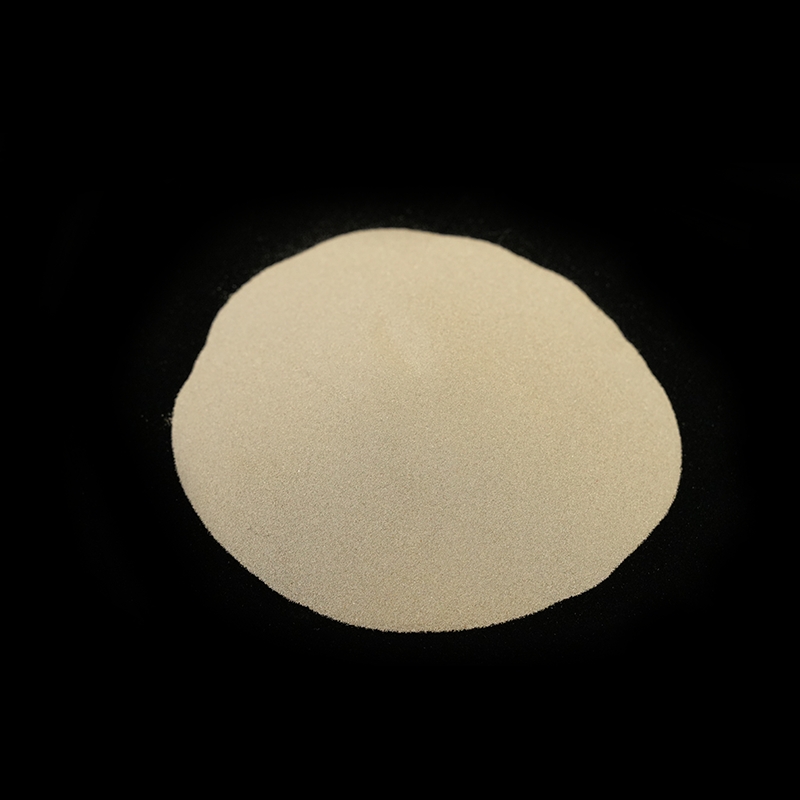 Laser Cladding Powders for Wear-Resistant Surface LayersNickel-, cobalt- and iron-based alloy powders screened for laser cladding, offering low-dilution, dense layers for shafts, valves, screws and wear surfaces.View Product →
A useful rule is to qualify the powder against the process, not against a catalogue page alone. Build a small test matrix, inspect the powder before and after use, and compare the results with the part requirements. If a grade works in a coating torch but not in a printer, that is not a contradiction. It is evidence that the process window, not just the chemistry, is doing the work.
Reuse, handling, and quality control
Powder reuse is common in additive manufacturing, but it is not a simple “top up and continue” decision. Repeated thermal exposure and handling can change particle size distribution, oxygen content, morphology, and flow behavior. Some alloys tolerate reuse well within a validated window; others need tighter limits or more frequent refresh. The right approach is to measure what changes and set a limit that protects the part, rather than relying on a fixed number of cycles that may not fit the operation.
Handling matters just as much. Moisture pickup, cross-contamination, improper sieving, and poor storage can undo a good incoming specification. A practical quality plan usually includes incoming lot checks, storage controls, sieve and blend records, periodic sampling, and a clear decision on when powder is no longer suitable for the intended build. These steps are not bureaucracy; they are how a powder supplier and a manufacturer keep a process from drifting.
A practical selection checklist
Before requesting a quote or committing to a production run, it helps to put the application into plain language. The checklist below is a good place to start:
- Define the dominant failure mode: wear, corrosion, heat, fatigue, conductivity, or a combination.
- Confirm the process and machine, including layer thickness, recoater type, and atmosphere.
- Specify the alloy grade by standard where possible, and state any property that cannot be compromised.
- Agree on particle size distribution and test method, not just a nominal range.
- Set limits for oxygen, moisture, flow, and contamination based on the process and part risk.
- Ask how lot traceability, packaging, and storage will be handled.
- Plan a qualification build with enough inspections to reveal spreading, porosity, and chemistry issues.
- Decide the reuse policy before production begins, including sampling frequency and refresh rules.
From powder specification to production reality
Our team works from the material side of this problem. We produce alloy powders, apply coating and cladding processes, and make custom wear-resistant parts such as rollers, shafts, and bushings. That combination is useful because powder behavior does not stop at the hopper. It continues into feeding, melting, bonding, finishing, and service. A grade that looks good on a certificate still has to survive the real process.
That experience does not replace a customer’s own qualification work, and it should not. It does help shorten the conversation. Instead of asking only for “additive manufacturing powder,” we can discuss the alloy, the particle cut, the oxygen limit, the process, and the failure mode together. That is usually where a practical specification begins: not with the widest possible claim, but with a clear understanding of what the powder must do, how it will be handled, and what evidence will show that it is ready for production.