

 English
 русский
 عربى
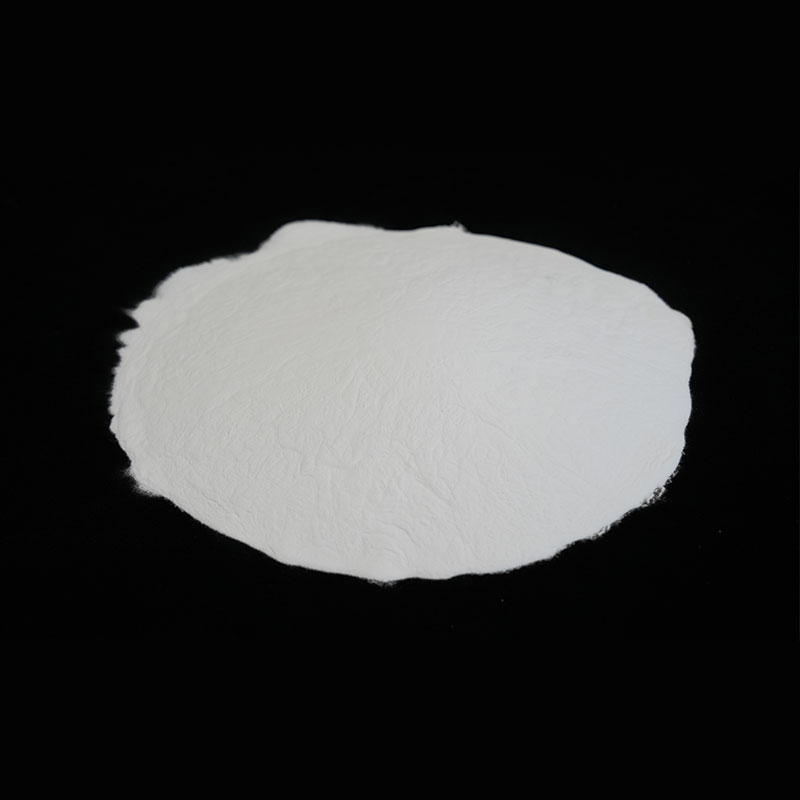
Chromium Oxide Ceramic Powder
Ceramic chromium oxide spray alloy powder is a hig...
View moreCeramic alloy powder is a granular substance made by mixing metal and ceramic materials. This material has the conductivity of metal and the hardness and wear resistance of ceramic, so it is widely used in various fields.


Anyone who has spent years standing next to a powder bed will tell you the same thing: the machine gets the attention, but the powder decides the out...
READ MOREAdditive manufacturing powder looks simple from a distance: fine metal particles, a hopper, a build plate, and a finished part. Up close, it is a car...
READ MORECobalt based alloy powder rarely gets much attention until a part stops working. Over the years we have seen it rescue valve seats that were being re...
READ MOREChromium oxide ceramic powder is one of those materials that rarely makes headlines but quietly keeps a great deal of industrial equipment running. I...
READ MOREAsk five people on a plant floor what ceramic powder means and you may get five different answers. To a potter it is the raw material behind a glaze....
READ MOREIndustry Knowledge Expansion
Particle size is often specified by a single range, but the actual distribution (D10, D50, D90) decides whether a Ceramic Powder melts evenly, feeds smoothly and forms a dense coating. Fines below 10 µm tend to overheat, vaporize or clog the feed line through static cling, while oversized particles stay partially unmelted and leave pores and weak inter-splat bonding. Each process therefore needs its own window, and using a laser cladding grade in a plasma gun, or the reverse, is one of the most common causes of unexplained coating failure.
| Process | Typical Size Range | Key Concern |
| Atmospheric Plasma Spray (APS) | 15–45 µm | Full melting of high-melting oxides |
| HVOF | 10–45 µm | Dense structure, limited oxidation |
| Laser Cladding | 45–150 µm | Flowability and stable powder feeding |
| Powder Bed Fusion | 15–53 µm | Layer packing density and spreadability |
When we classify powder at Jiangsu Crystal Additive Manufacturing, we can tighten the cut to the window your equipment needs, because a narrow distribution usually matters more than the nominal range printed on the label.
Oxide Ceramic Powder such as alumina, titania, chromia and yttria-stabilized zirconia has a large specific surface area and readily adsorbs moisture from ambient air. Damp powder agglomerates, flows unevenly in the feeder and can cause pulsing in the plasma plume or spitting in the laser melt pool, which shows up as porosity and surface roughness. This is a handling problem rather than a material defect, and it is easy to prevent with a simple routine.
Ceramic Alloy Powder, usually a hard ceramic phase bonded by a metallic matrix (also called cermet), is chosen mainly by temperature and corrosion environment. Tungsten carbide grades deliver excellent sliding and abrasive wear resistance, but the carbide begins to decarburize and oxidize noticeably above roughly 500 °C. Chromium carbide grades sacrifice some hardness but keep their properties to much higher temperatures, which makes them the standard choice for boiler tubes and hot gas paths.
| Powder Type | Approx. Upper Service Temperature | Typical Use |
| WC-Co / WC-Co-Cr | ~500 °C | Pump shafts, landing gear, rolls |
| WC-Ni | ~500 °C, better in corrosive media | Chemical and marine components |
| Cr3C2-NiCr | ~850 °C | Boiler tubes, valve seats, turbine parts |
These figures are guidelines and shift with coating density, load and atmosphere, so a trial on the real part remains the best confirmation.
The melting point tells you how much heat input is needed, while the thermal expansion coefficient tells you whether the coating will survive thermal cycling. A large mismatch between coating and steel substrate produces residual stress and eventually spallation, particularly on thick layers. This is why zirconia, with its comparatively high expansion, is used for thermal barriers over nickel alloys, while alumina and chromia are preferred where hardness and wear resistance are required.
| Oxide | Melting Point | Main Strength |
| Al2O3 | ~2072 °C | Electrical insulation, hardness |
| TiO2 | ~1843 °C | Toughness, easier to melt; often blended with Al2O3 |
| Cr2O3 | ~2435 °C | Wear and corrosion resistance, smooth finish |
| ZrO2 (Y2O3-stabilized) | ~2700 °C | Low thermal conductivity, thermal barrier |
If the substrate expansion is far from that of the coating, a metallic bond coat such as NiCrAlY or a graded layer is normally worth adding before the top oxide layer.
Excess porosity usually points to unmelted particles or a spray distance that is too long. Check the particle size distribution first, then raise the plasma power or shorten the stand-off distance in small steps of 10–20 mm. If the powder itself is hollow or poorly sintered, no parameter change will fully compensate.
Cracks appear when a hard ceramic-rich layer cools too quickly on a rigid substrate. Preheating the part to 200–400 °C, reducing the ceramic fraction, or lowering the scan speed all decrease the thermal gradient. Depositing thinner layers with a nickel-based transition zone is another proven remedy.
Poor adhesion is more often a surface preparation problem than a powder problem. Grit blasting to Sa 3 with a roughness of Ra 3–6 µm, spraying within a few hours of blasting, and keeping the substrate free of oil are the basic requirements. Our technical team is glad to review your parameters and recommend a suitable Ceramic Powder or Ceramic Alloy Powder grade if you are chasing a recurring defect.
Batch-to-batch consistency is what keeps a coating line stable, so a short incoming inspection saves far more time than it costs. The items below can be checked with modest laboratory equipment and give a reliable picture of whether a new lot will behave like the previous one.
We supply a test report with every shipment, and we can keep retained samples of each lot for traceability if your quality system requires it.


 Bianzhuang Industrial Concentration Zone, Yuxi, Jiangyan District, Jiangsu Province
 +86-0523-86505558 / +86-0523-86506668
 +86-13961019985 / +86-18852676660
 [email protected]
Copyright ©Jiangsu Crystal Additive Manufacturing Co., Ltd. All Rights
Reserved.
 Oxide Ceramic Powder Company