English
 русский
 عربى
Anyone who has spent years standing next to a powder bed will tell you the same thing: the machine gets the attention, but the powder decides the outcome. Additive manufacturing powders are not a commodity filler — they are engineered feedstock, and their chemistry, particle size distribution, shape and cleanliness travel with every single part you build. Get them right and the process becomes predictable. Get them wrong and you spend weeks chasing porosity you cannot explain.
We have spent a long time producing alloy powders and putting them to work in cladding, spraying and wear-part manufacturing, so this guide is written from the shop floor rather than the brochure. It covers what these powders are, how the main families differ, which specifications actually matter, and how to match a powder to the process you run.
Content
- 1 What additive manufacturing powders actually are
- 2 The main powder families and what each is good at
- 3 Particle size, shape and the specifications that matter
- 4 How the powder is made
- 5 Matching powder to your process
- 6 Reuse, handling and quality control
- 7 When the powder leaves the printer
- 8 Questions worth asking before you place an order
What additive manufacturing powders actually are
In powder-based additive manufacturing, a metal powder is consolidated layer by layer into a solid part. The binding happens in different ways depending on the machine: a laser or electron beam melts each layer in powder bed fusion, a print head deposits binder in binder jetting before sintering, and a focused energy source melts powder as it is fed through a nozzle in directed energy deposition.
This is worth separating from conventional powder metallurgy. Press-and-sinter PM tolerates irregular, angular particles because the powder is compacted under high pressure before heating. Additive processes usually cannot do that. The powder has to flow, spread into a thin, even layer, and absorb energy consistently from one layer to the next. That is why AM feedstock is almost always gas or plasma atomised, spherical, and tightly graded — the process physics demand it, not the marketing.
There is also a practical overlap worth knowing about. Powders developed for laser cladding and thermal spraying are close cousins of printer powders: same atomisation route, same metallurgy, often a different size cut. A supplier who understands both sides can usually save you a lot of trial and error.
The main powder families and what each is good at
Most industrial AM powders fall into a handful of families. The table below is a rough map, not a rule book — within each family there are dozens of grades, and the grade matters far more than the family name.
| Powder family | Typical strengths | Where it is usually used |
|---|---|---|
| Iron-based | Cost-effective, good hardness, easy to post-process | General machine parts, tooling, cladding of steel components |
| Nickel-based | Corrosion resistance, toughness, good high-temperature behaviour | Chemical and process equipment, aerospace-adjacent parts, cladding |
| Nickel-based superalloy | Strength retained at high temperature, oxidation resistance | Hot-section components, furnace hardware, energy equipment |
| Cobalt-based | Wear resistance, hot hardness, galling resistance | Valve seats, screws, pump parts, hardfacing and cladding |
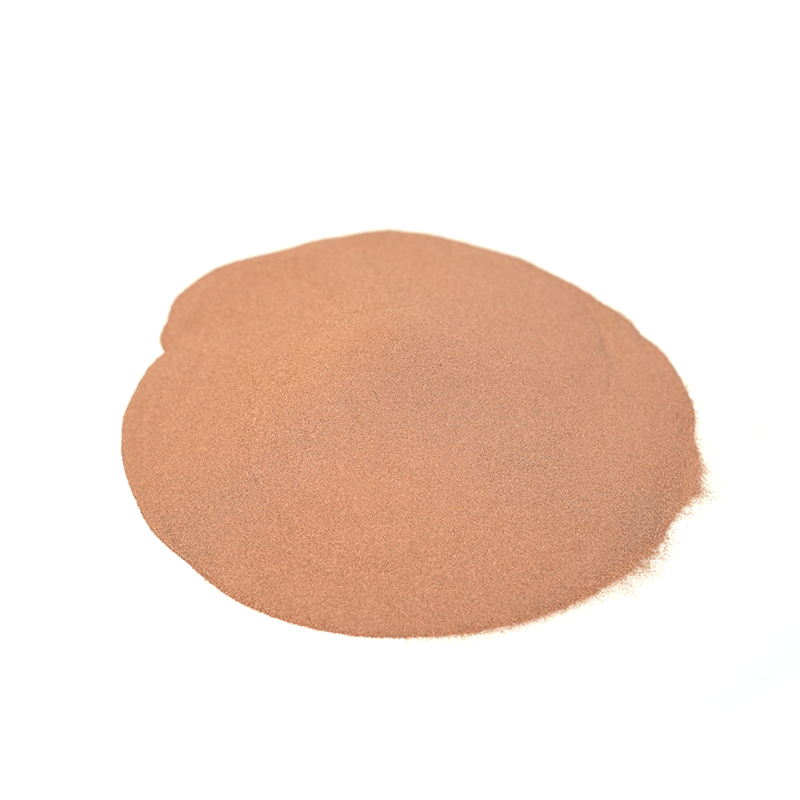
| Copper-based | Thermal and electrical conductivity | Heat sinks, induction components, conductive inserts |
| Carbide composite | Very high hardness, excellent abrasive wear life | Cutting and mining tools, wear plates, coating layers |
| Ceramic and oxide | Thermal barrier, insulation, chemical inertness | Plasma-sprayed coatings, high-temperature surfaces |
Cobalt-based alloys deserve a special mention because they are the workhorse of wear protection. Where a part rubs, slides or sees hot abrasive contact, a cobalt grade often outperforms harder but more brittle alternatives. We keep a broad range of these powders precisely because the same material serves both a printer and a welding torch.
 Cobalt-Based Alloy Powders for Wear and High-Temperature ServiceBrowse SD-Co grades spanning 28–53 HRC for valves, dies, rotors and wear overlays; compare chemistry and particle cuts before assessing physical behavior.View Product →
Particle size, shape and the specifications that matter
Two powders can carry identical chemistry certificates and behave completely differently in the machine. The difference usually sits in the physical characteristics, and these are the ones we discuss first with any new customer.
Reading a powder specification
- Particle size distribution: the cut has to match the layer thickness and the machine. A 15–45 µm cut suits fine powder bed systems; 45–105 µm is more typical for directed energy deposition and electron beam work.
- Sphericity and surface texture: round, smooth particles spread evenly and flow well. Satellites and irregular fragments cause streaking and inconsistent melting.
- Flow rate and apparent density: these tell you how the powder will behave in the hopper and the recoater, not just in a datasheet.
- Oxygen and nitrogen content: the single most common hidden cause of poor ductility and weld defects.
- Porosity inside particles: internal voids can survive melting and appear later as gas porosity in the part.
- Moisture and contamination: especially important with hygroscopic grades and after long storage.
If you want to go deeper on how the distribution curve affects real build behaviour, our note on particle size distribution walks through the practical consequences.
How the powder is made
Almost every AM-grade metal powder starts with a melt. Gas atomisation breaks that melt into droplets with high-pressure inert gas and solidifies them into near-spherical particles — the most common route for nickel, cobalt and iron grades. Water atomisation is cheaper and faster but produces irregular shapes, so it is used mainly for press-and-sinter and some cladding applications. Plasma atomisation and centrifugal atomisation produce highly spherical, low-satellite powder, which is why they dominate the more demanding titanium and superalloy markets.
The atomisation step is only half the story. Sieving, classification, blending and packaging determine whether the specification you receive matches the specification you ordered. In our own plant the powder is produced from the raw melt through to the finished, sieved product, which is the only way to keep oxygen pickup and cross-batch variation under control.
Matching powder to your process
There is no universally "best" powder — only the best fit for a process, a geometry and a cost target. Powder bed fusion wants fine, free-flowing cuts and low oxygen. Directed energy deposition is far more tolerant of size but sensitive to feed consistency. Laser cladding sits somewhere in between and usually works best with a coarser, tightly controlled cut so the melt pool stays stable at speed.
It also helps to think about what happens after the build. A grade that machines beautifully may be a poor choice for a part that will be polished, and a grade with excellent wear resistance may be difficult to finish. Deciding the post-processing route early usually narrows the powder choice to two or three candidates.
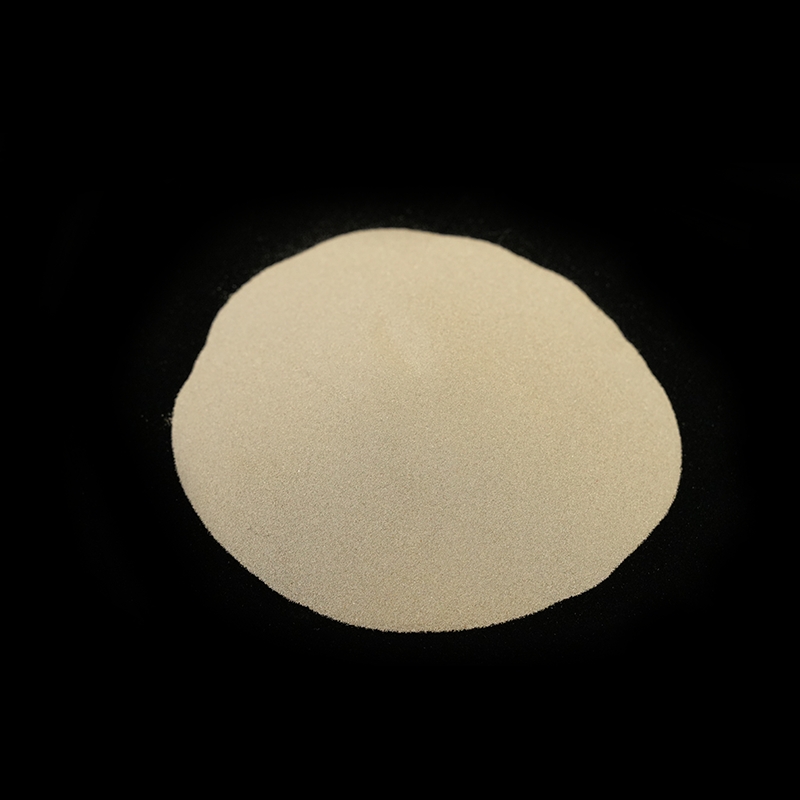 Laser Cladding Alloy Powders in Nickel, Cobalt and IronReview nickel-, cobalt- and iron-based powders plus carbide composites, with 53–150 µm cuts and hardness ranges, to shortlist grades before planning post-processing.View Product →
Reuse, handling and quality control
Powder is expensive, so almost everyone reuses it. That is fine, within limits. Each cycle exposes the material to heat, moisture and handling, and the fines fraction grows while oxygen creeps upward. A workable approach looks like this:
- Track the number of reuse cycles per batch and record it with the build.
- Re-sieve after every build and check the distribution against the original cut.
- Measure oxygen content periodically rather than assuming it is stable.
- Store sealed, dry and clearly labelled — cross-contamination between alloy grades is much easier to cause than to detect.
- Retire batches on evidence, not on habit.
For critical parts, a simple incoming inspection routine — chemistry, distribution, flow, and a visual check under magnification — catches most problems before they reach the machine.
When the powder leaves the printer
Not every wear problem justifies a new part. A large roller, a screw flight or a pump plunger is often far more economically restored than replaced, and this is where the same atomised powders earn their keep in a different role. Through laser cladding, a metallurgically bonded layer is deposited onto a worn surface with minimal dilution and very little distortion, and the component goes back into service with a harder face than it had originally.
For abrasive and erosive duty, carbide-bearing thermal spray powders are frequently the better answer, delivering a hard, well-bonded layer at relatively low heat input.
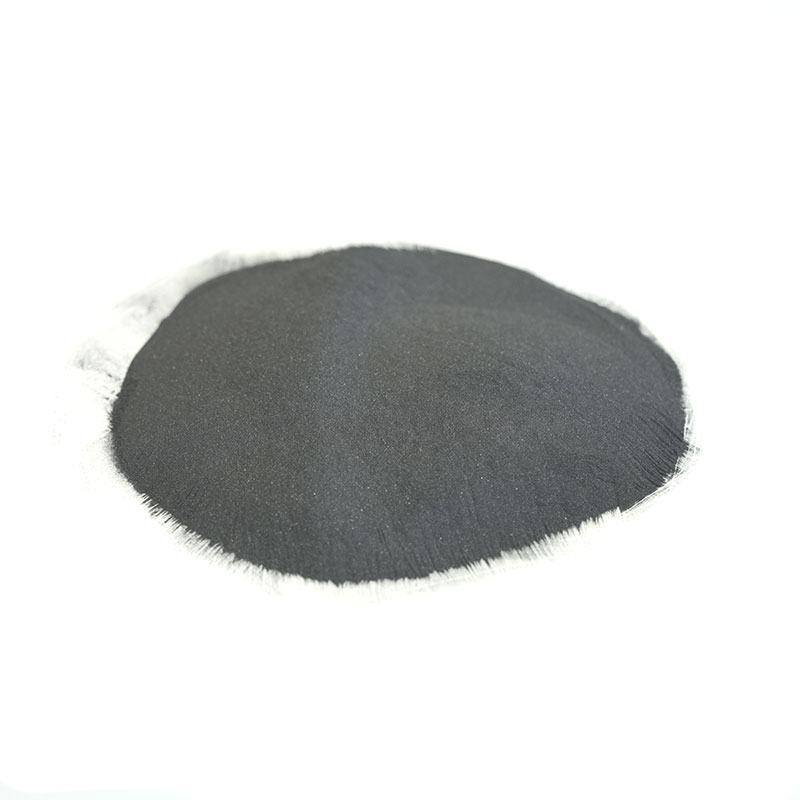 Tungsten Carbide Thermal Spray Powders for Abrasive WearCompare cobalt-, nickel- and NiCr-bonded carbide grades for HVOF, plasma and cladding, with reported hardness, chemistry and particle-size options.View Product →
Questions worth asking before you place an order
- Which size cut was this batch classified to, and what does the actual distribution curve look like?
- What are the measured oxygen and nitrogen levels, not the typical values?
- Which atomisation route was used, and how were satellites and fines removed?
- Can the supplier support both the powder and the downstream process, such as cladding or spraying?
- What does their batch traceability actually record?
A supplier who answers these without hesitation is usually a supplier who understands the material rather than just storing it.
Additive manufacturing powders reward a little patience at the selection stage. Understand the family, insist on the physical specification, match the cut to the process, and keep the handling discipline tight. Do that and the machine, the parameters and the part quality all become far easier to control — and the powder stops being the variable you cannot explain.