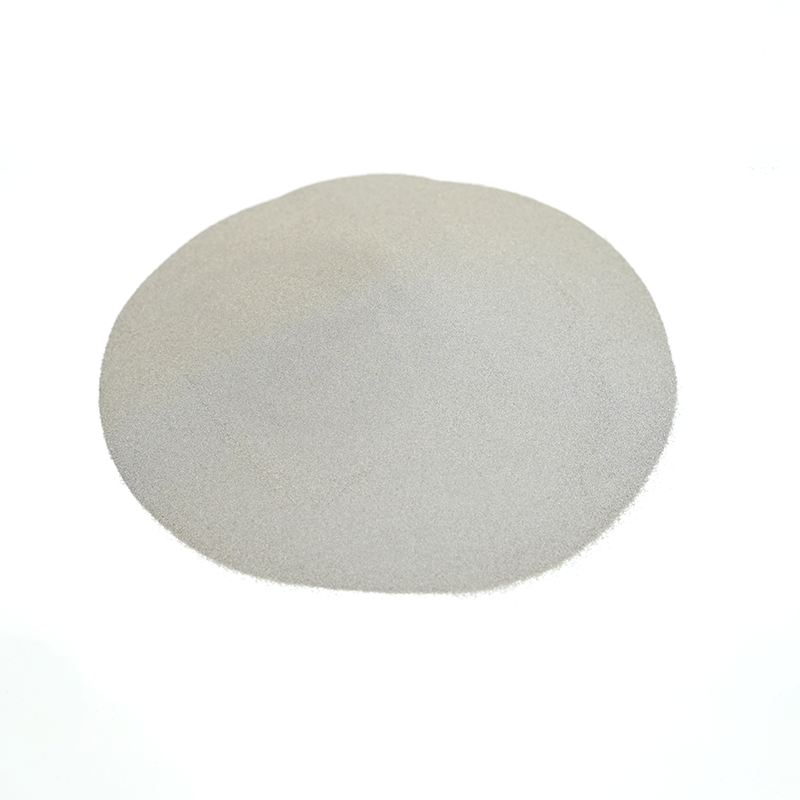
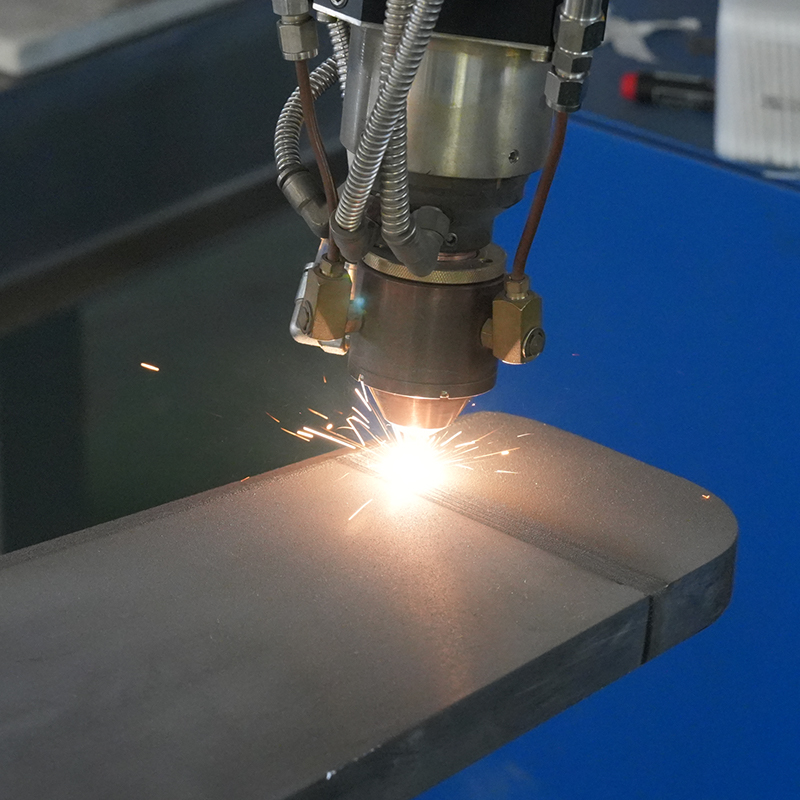
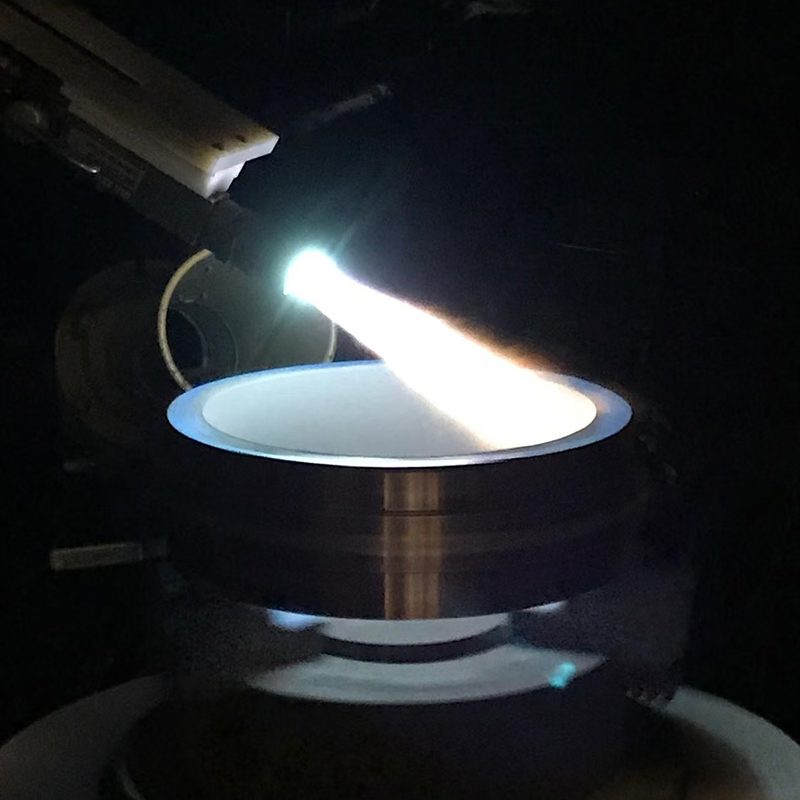
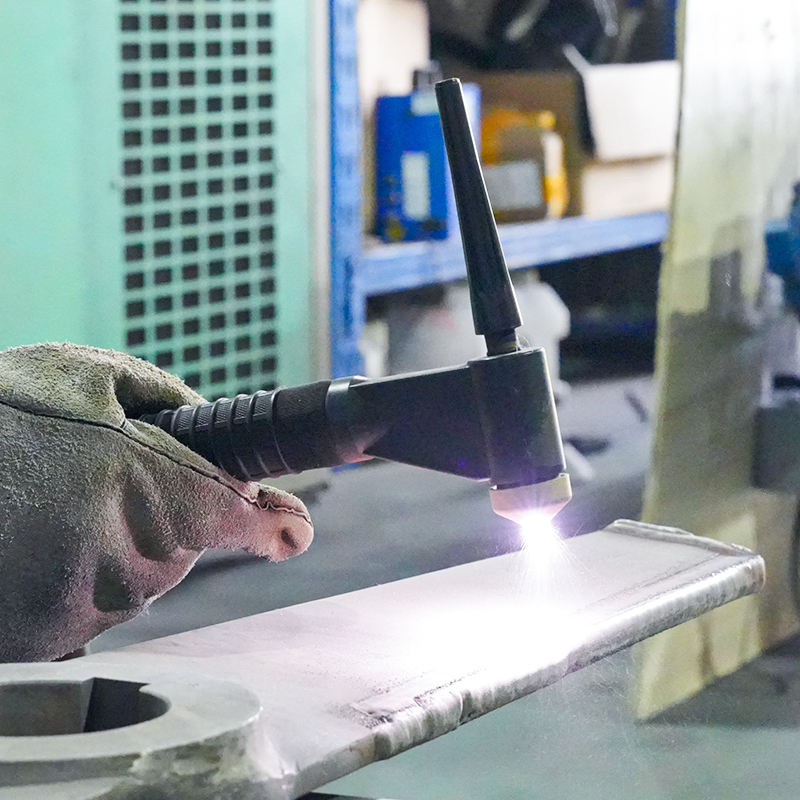
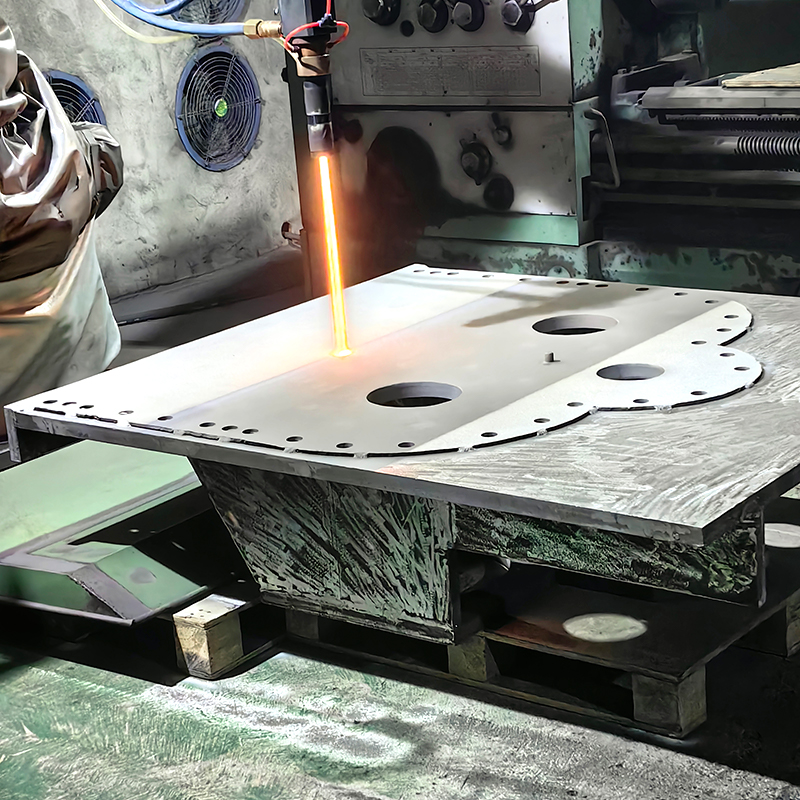
Jiangsu Crystal Additive Manufacturing Co., Ltd. produces iron-based alloy powder for hardfacing, laser cladding, thermal spray and powder metallurgy. Iron forms the matrix; chromium, nickel, silicon, boron and carbon carry the hardness, with molybdenum, tungsten, manganese, copper and niobium added where a specific duty calls for them. The range runs from a tough 30 HRC build-up grade to 62 HRC high-carbide compositions, alongside stainless and precipitation-hardening iron-base powders for corrosion-resistant and structural work.
Powder leaves our plant in Jiangsu, China as a screened, finished product with the chemistry and particle size cut agreed against the working point of the part — substrate, deposition process, coating thickness and service environment.
Where Iron-Based Alloy Powder Fits
Iron-base hardfacing powders are the workhorse of wear protection where cobalt and nickel grades are not justified by the service conditions. They wet out and fuse readily on carbon steel, low-alloy steel and cast iron, build a dense metallurgical bond, and hold hardness at a fraction of the alloying cost of cobalt-based systems.
- Rail and heavy transport — rail head and switch repair, gears, axles, scraper shafts.
- Agriculture and construction — hoe teeth, bucket edges, plough points, crusher and mixer components.
- Extrusion and forming — extrusion drums and screws that need high hardness with retained toughness.
- Automotive — engine parts, clutch gears and transmission shafts produced by press-and-sinter routes.
- Energy and process plant — high-temperature piping, refining equipment and chemical valve trim, where the stainless iron-base grades are used.
Where the duty involves strong acid attack, chloride pitting or sustained service above the oxidation limit of an iron matrix, a Nickel Based Metal Powder or Cobalt Based Alloy Powder is the more appropriate matrix. Iron-base grades are selected on wear rate, load and cost per hour of service.
Grade Range and Application Matching
| Grade |
Hardness (HRC) |
Main alloying elements (wt%) |
Typical application |
| SD-Fe30 |
30 |
C 0.2, Cr 6, Si 3, Ni 30, B 1.2–1.8, Fe bal. |
Repair of railway rails and gears |
| SD-Fe45 |
45 |
C 0.6, Cr 18, Si 3, Ni 12, B 2, W 3, Fe bal. |
Gears, scrapers, axles |
| SD-Fe55 |
54 |
C 0.8, Cr 18, Si 4, Ni 14, B 3, Fe bal. |
Repair or preventive protection of turbine blades, hoe teeth, scraper shafts |
| SD-Fe60 |
58 |
C 1, Cr 19, Si 4, Ni 16, B 4, W 3, Fe bal. |
Agricultural machinery, construction machinery |
| SD-JZ1 |
62 |
C 3.3, Cr 2, Si 1, Ni 5, B 1.4, Mn 1, Fe bal. |
Extrusion drums |
| SD-JZ2 |
62 |
C 2.7, Cr 2.8, Si 1, Ni 5.5, B 1.9, Mn 1, Fe bal. |
Extrusion drums |
| SD-JZ3 |
62 |
C 1.5, Cr 4.5, Si 1, Ni 7, B 2.9, Mn 1, W 4.5, Fe bal. |
Extrusion drums |
| SD-JZ4 |
60 |
C 1.7, Cr 4.5, Si 1.5, Ni 11, B 3, Mn 0.8, Fe bal. |
Extrusion drums |
| SD-316L |
Matrix grade |
C ≤0.03, Cr 16–18, Si ≤1, Ni 10–14, Mo 2–3, Fe bal. |
Corrosion-resistant iron-base overlay |
| SD-304 |
Matrix grade |
C ≤0.08, Cr 18–20, Si ≤1, Ni 8–11, Fe bal. |
Corrosion-resistant iron-base overlay |
| SD-17-4PH |
Matrix grade |
C ≤0.07, Cr 15–17.5, Si ≤1, Ni 3–5, Cu 3–5, Nb 0.25, Fe bal. |
Precipitation-hardening structural parts |
| SD-430 |
Matrix grade |
C ≤0.12, Cr 16–18, Si ≤0.75, Ni ≤0.6, Fe bal. |
Corrosion-resistant iron-base overlay |
Reading the Grade Family
The Fe series builds hardness through chromium-nickel-boron additions. As boron and carbon rise, the fused deposit carries more hard boride and carbide phase, so wear resistance climbs and machinability falls. SD-Fe30 stays tough enough for rail and gear repair; SD-Fe60 is the general-purpose high-wear choice for ground-engaging tools.
The JZ series moves in a different direction: high carbon with tungsten and manganese, aimed at extrusion drums where the surface must resist hot metal abrasion and maintain a hard, stable working face. The stainless grades — 316L, 304, 17-4PH and 430 — are used where corrosion resistance or a specific matrix chemistry matters more than peak hardness.
Process Fit and Particle Size Windows
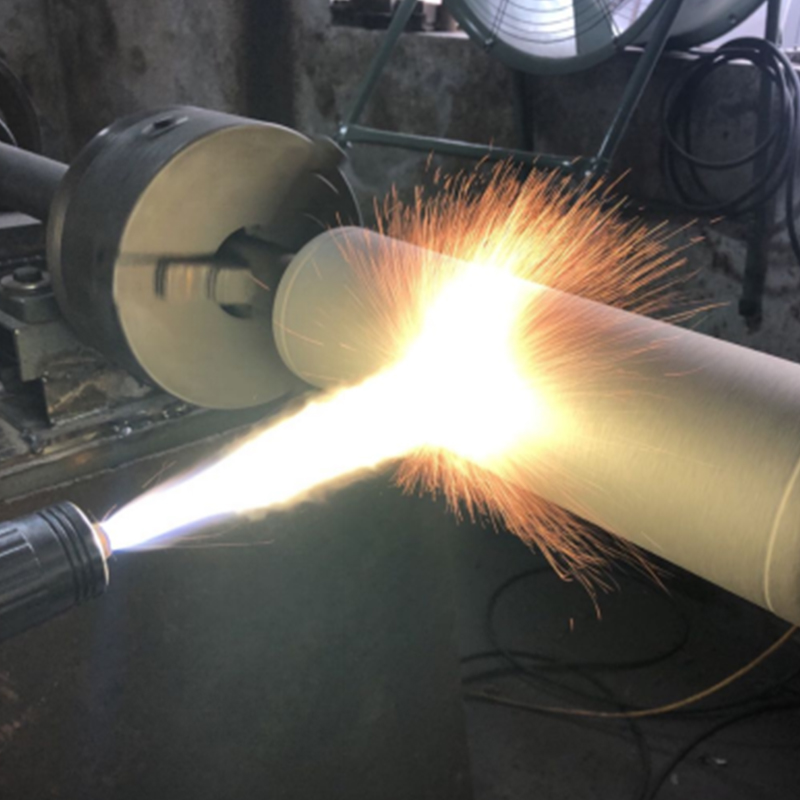
Grade and particle size are chosen together. A powder that performs well in a spray-and-fuse torch will not feed reliably through an HVOF barrel, and a fine HVOF cut will not build thickness economically under a plasma arc.
| Deposition process |
Typical iron-base grade |
Typical size window |
Notes |
| Oxy-acetylene spray welding |
SD-Fe45, SD-Fe55, SD-Fe60 |
45–106 µm |
Dense fused layer; cast iron repair, glass moulds, small parts |
| PTA / plasma cladding |
SD-Fe45 to SD-Fe60, JZ series |
45–150 µm |
Higher deposition rate; dilution controlled at the interface |
| Laser cladding |
SD-Fe55, SD-Fe60, JZ series |
45–150 µm |
Low dilution, thin heat-affected zone; spherical gas-atomised powder preferred |
| HVOF / supersonic flame spray |
Fine cuts of the Fe series |
15–45 µm |
Dense, low-oxide coatings on cylindrical work |
| Press and sinter / powder metallurgy |
SD-Fe30, SD-Fe45, stainless grades |
Below 150 µm |
Compressibility and green strength drive the cut |
| Additive manufacturing |
Gas-atomised spherical grades |
15–53 µm |
Sphericity, flowability and oxygen content are the controlling variables |
Size windows above reflect common industry practice. The cut we deliver is fixed against your feeder, torch or machine specification and confirmed on the order.
For laser cladding work we also supply Laser Cladding Powder grades where a nickel or cobalt matrix is required instead of iron.
Manufacturing and Quality Control
Three atomisation routes are available, and the choice follows the powder's job. Vacuum and gas (aerosol) atomisation give spherical and sub-spherical particles with low oxygen content and good flow; water atomisation gives a fast, efficient route to irregular powder for press-and-sinter and some cladding duties.
- Chemistry control — melt composition is set to the agreed specification before atomisation, with impurity limits held batch to batch.
- Particle size distribution — laser particle size analysis on the screened cut, with cyclone separation and classification controlling the distribution.
- Oxygen and gas content — hydrogen, oxygen and nitrogen analysis on the finished powder.
- Hardness — Vickers and modular hardness testing on deposited or consolidated samples.
- Internal quality — industrial CT inspection for internal defects where the application requires it.
Production is organised under a quality management system aligned with ISO 9001 practice, from raw material intake through to finished powder.
Configuration Options
Iron-based alloy powder is supplied against a defined working point rather than as a single catalogue item. The variables we set with you are:
- Chemistry — a standard grade from the table above, or an adjusted composition within the iron-base family.
- Hardness target — specified as deposited hardness for hardfacing grades, or as matrix condition for stainless and 17-4PH types.
- Particle size cut — a standard window or a narrow cut matched to your feeder and nozzle.
- Morphology — spherical gas-atomised or irregular water-atomised, depending on the deposition method.
- Quantity — trial lots for process qualification through to production volumes.
- Packaging and labelling — net weight, container format and batch identification agreed at order confirmation.
Pure metal powders — nickel, cobalt, copper and similar — can also be customised where a blend or a matrix adjustment is needed.
Information We Use to Configure Your Solution
A quotation and a powder specification are prepared from the following project inputs. The more of these that are fixed, the closer the first trial lot comes to the production result.
- Substrate material and condition — carbon steel, low-alloy steel, cast iron, stainless or other.
- Component geometry, dimensions and the area to be protected.
- Deposition process and equipment, including feeder and nozzle type.
- Target coating thickness, hardness and surface finish.
- Service environment — abrasion, impact, corrosion, operating temperature.
- Required particle size cut and any existing specification to match.
- Annual or per-project quantity, and trial quantity for qualification.
- Documentation required — batch certificate, chemistry, PSD, oxygen content, hardness data.
Handling, Storage and Operator Safety
Metal powders behave differently from solid stock and are managed accordingly. Iron-base powders are not pyrophoric in normal handling, but fine fractions can form combustible dust clouds, so local extraction at the feeder and torch, bonding and earthing of equipment, and avoidance of open ignition sources are standard practice.
- Store sealed and dry; moisture pickup degrades flow and raises oxygen in the deposit.
- Use dust masks, eye protection and gloves when handling or sieving powder.
- Keep powder away from naked flames and from reactive or oxidising materials.
- Clean spills dry, without compressed air, and dispose of waste per local regulation.
Documentation, Delivery and Project Handoff
Each batch is released with the test data agreed for the order — chemical composition, particle size distribution, oxygen content and hardness where applicable — so the receiving inspection can be checked against the same numbers used at release. Batch identification is carried through packaging and paperwork to keep traceability intact on site.
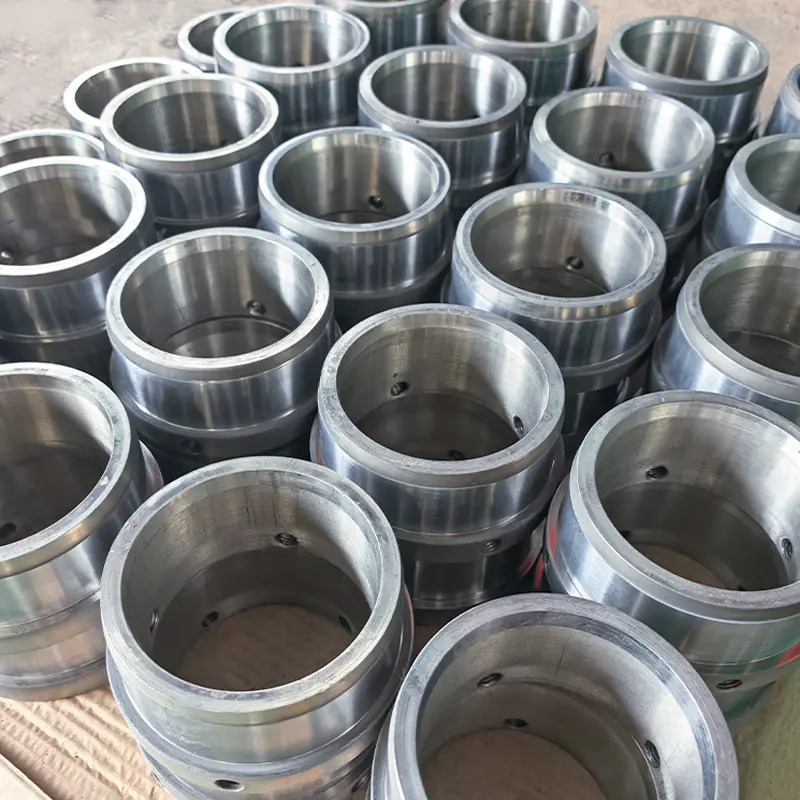
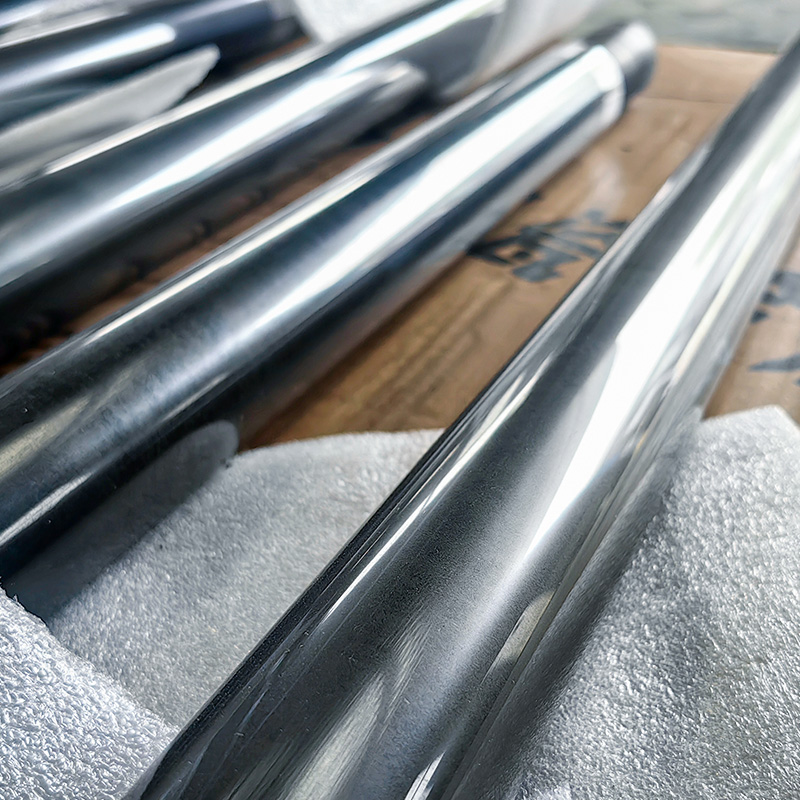
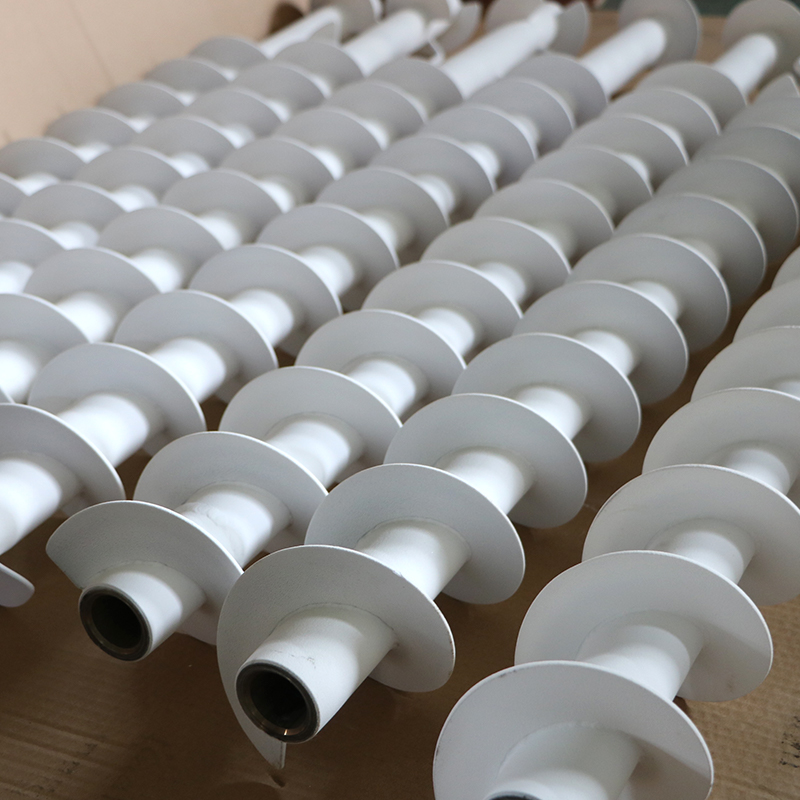
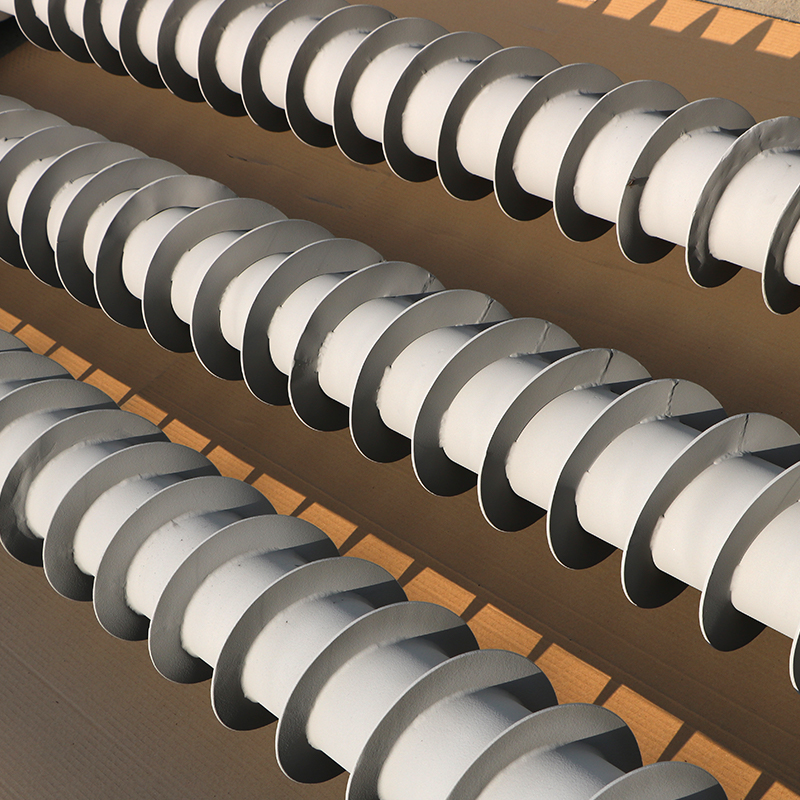
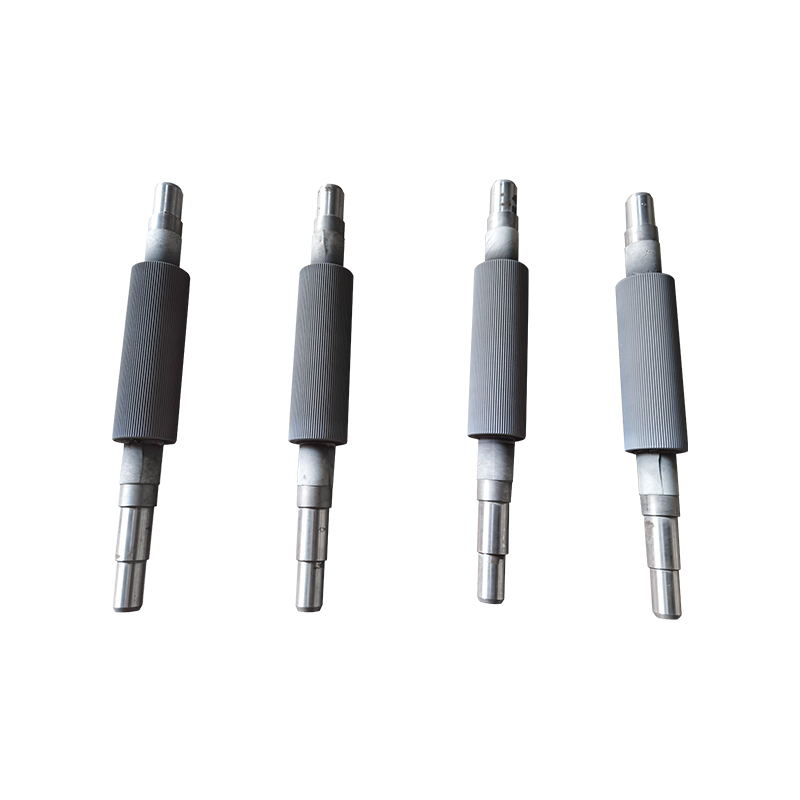
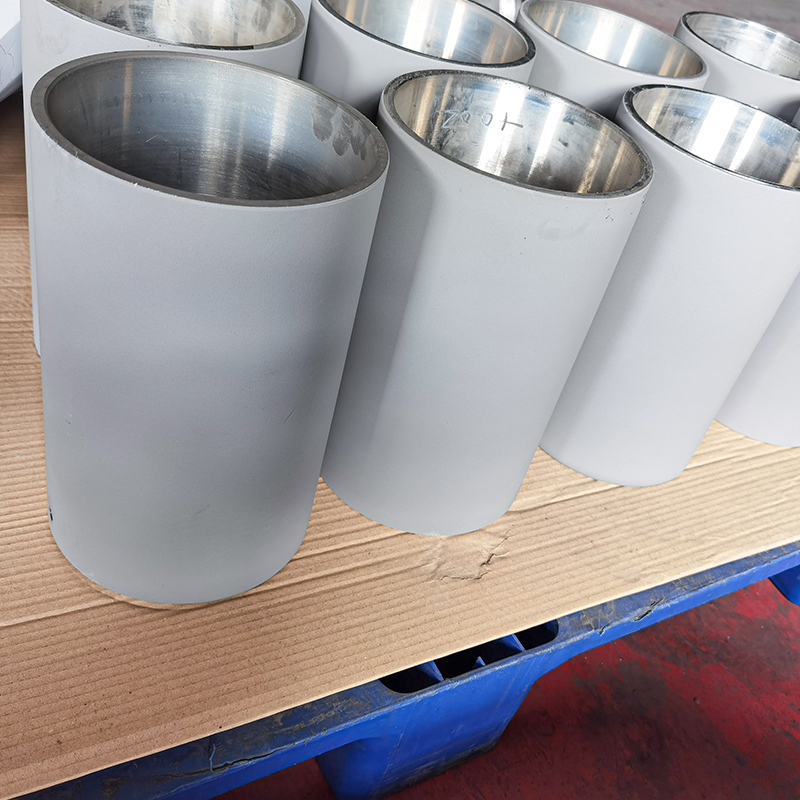
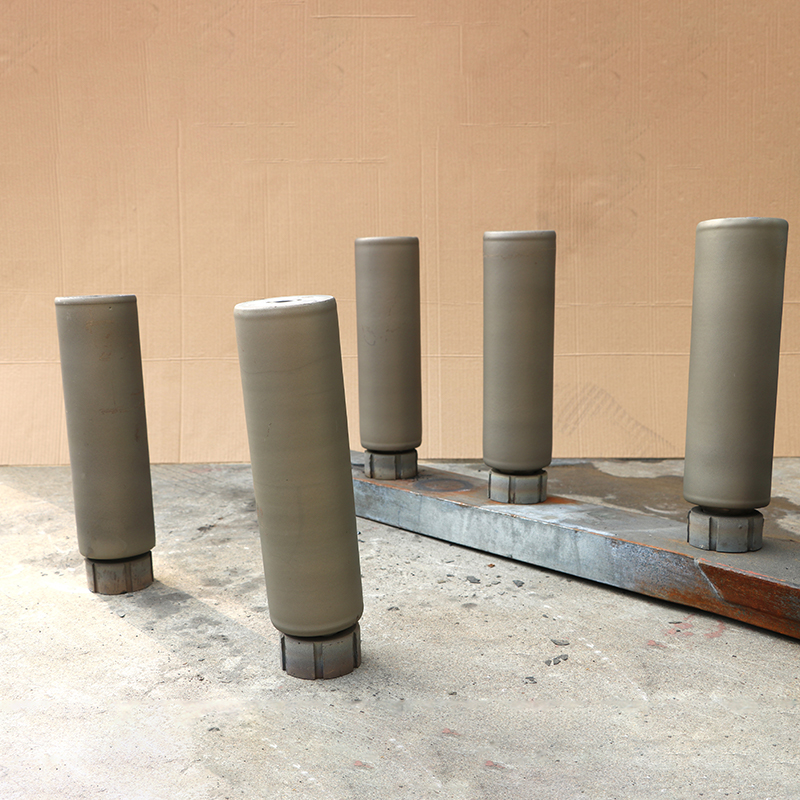
For new applications we work from a trial quantity to a qualified specification, then scale to production volumes. Where the powder is part of a wider wear-protection programme, our coating and wear-resistant component work — rollers, shafts, bushings, plungers and spiral shafts — runs on the same material family, which keeps the powder and the finished part aligned.
Jiangsu Crystal Additive Manufacturing Co., Ltd. is an Iron Based Alloy Powder manufacturer supplying both standard grades and adjusted compositions, with technical support from grade selection through to batch release.
Frequently Asked Questions
What is the difference between SD-Fe55 and SD-Fe60?
SD-Fe55 sits at 54 HRC with 0.8% carbon and 3% boron; SD-Fe60 reaches 58 HRC with 1% carbon, 4% boron and 3% tungsten. SD-Fe60 carries a higher volume of hard phase and is aimed at agricultural and construction wear parts, while SD-Fe55 is used for turbine blade repair, hoe teeth and scraper shafts where a balance of hardness and edge toughness is needed.
Can iron-based alloy powder be used for laser cladding?
Yes. SD-Fe55, SD-Fe60 and the JZ series are used in laser cladding, where low dilution and a thin heat-affected zone preserve the substrate. Gas-atomised spherical powder with a controlled cut feeds more steadily through a laser cladding head than irregular powder, and we match the size window to the head and nozzle in use.
Which particle size do you supply?
We supply screened cuts matched to the process — typically 45–106 µm for oxy-acetylene spray welding, 45–150 µm for PTA and laser cladding, 15–45 µm for HVOF, and finer spherical cuts for additive manufacturing. The exact cut is fixed against your equipment specification rather than supplied as a single default.
Can you adjust chemistry or hardness for a specific part?
Yes. Within the iron-base family we adjust carbon, boron, chromium, nickel, tungsten and manganese to move hardness and wear behaviour toward the duty of the part. The starting point is the working point: substrate, deposition process, coating thickness and the wear or corrosion mechanism that caused the failure.
Do you produce stainless iron-base grades such as 316L and 17-4PH?
SD-316L, SD-304, SD-17-4PH and SD-430 are part of the range. These are matrix grades rather than hardfacing grades: 316L and 304 are used for corrosion-resistant overlays, 17-4PH for precipitation-hardening structural parts, and 430 where a ferritic stainless matrix is appropriate.
What information do you need to quote an iron-based alloy powder?
Substrate material, component geometry and protected area, deposition process and equipment, target thickness and hardness, service environment, required particle size cut, quantity, and the documentation you need with the batch. With those inputs we can propose a grade, a size cut and a trial quantity for qualification.


 English
 русский
 عربى