Jiangsu Crystal Additive Manufacturing Co., Ltd. is a Nickel Based Metal Powder manufacturer supplying self-fluxing and high-alloy nickel powders for hardfacing, thermal spray, laser cladding and powder metallurgy. The range runs from machinable 20 HRC glass-mould grades to 62 HRC deposits for screw feeders and extrusion tooling, with high-molybdenum and carbide-bearing variants for corrosion, oxidation and elevated-temperature service. Powder is produced at our factory in the Bianzhuang Industrial Concentration Zone, Jiangyan District, Jiangsu Province, China, and supplied by grade, by particle size cut and by adjusted chemistry.
Nickel-Based Alloy Powder Range and Application Fit
Nickel-based alloys use nickel as the matrix and add chromium, boron, silicon, iron, carbon, molybdenum, tungsten or copper to set working hardness and service behaviour. Hardness is selectable between roughly 20 and 62 HRC, so one material family covers both machinable forming tools and severe sliding wear. Deposits hold useful properties up to about 315 °C (600 °F) and resist oxidation well.
- 20-35 HRC - glass moulds, forming dies, slide rails and gear teeth. Deposits are machinable and can be hand-ground back to profile.
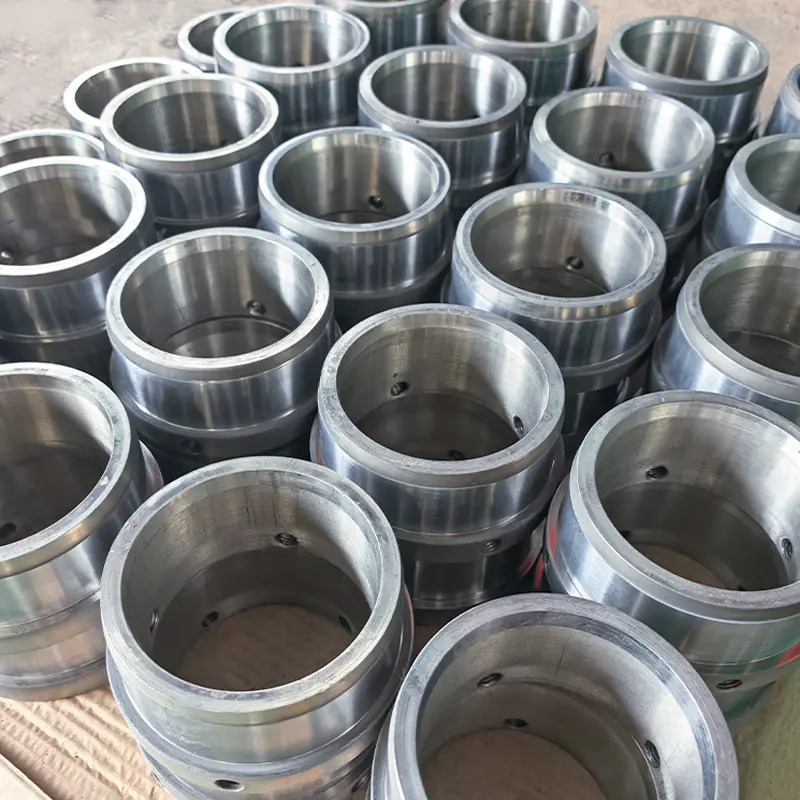
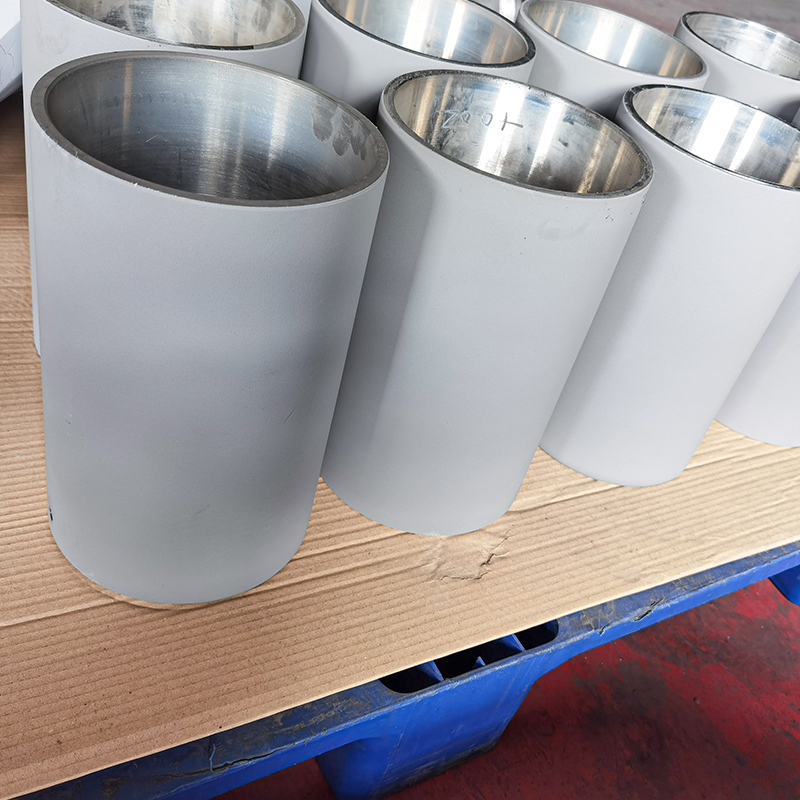
- 40-52 HRC - pump shafts, pulp knives, valve seats, screw rods, bearing sleeves and corrosion-resistant pump components.
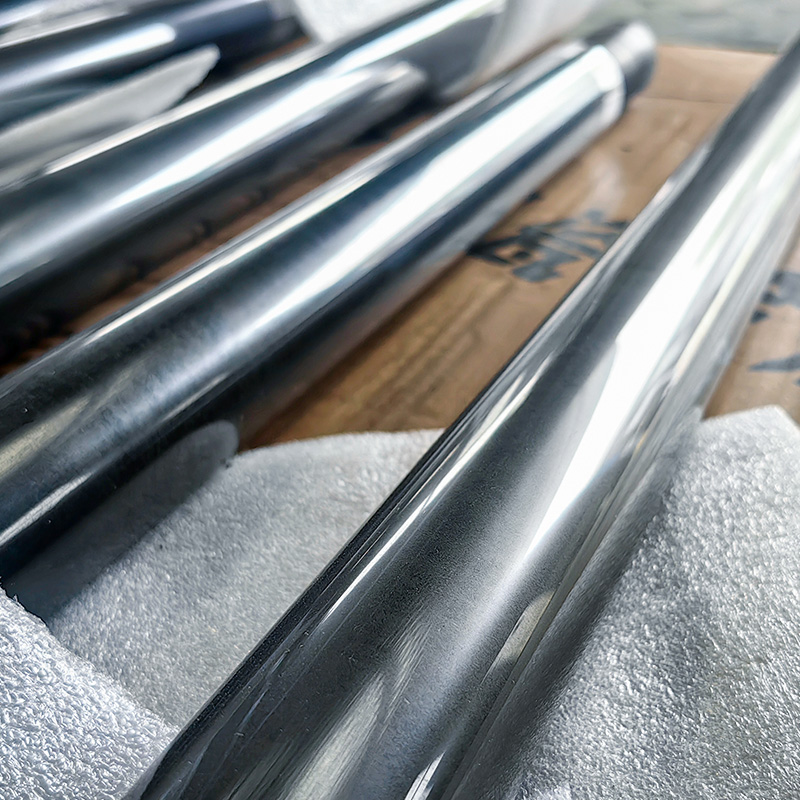
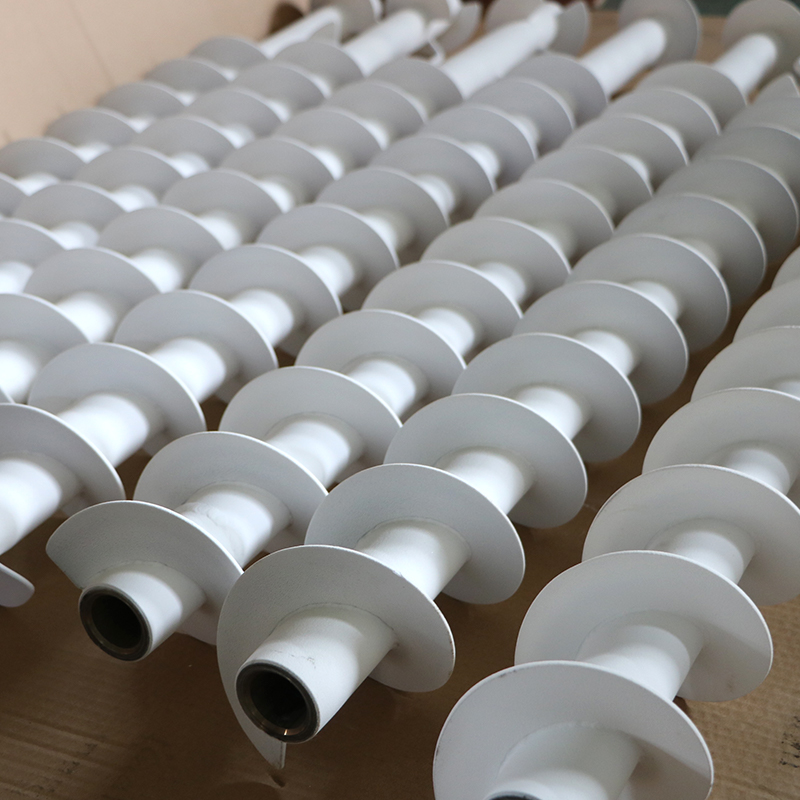
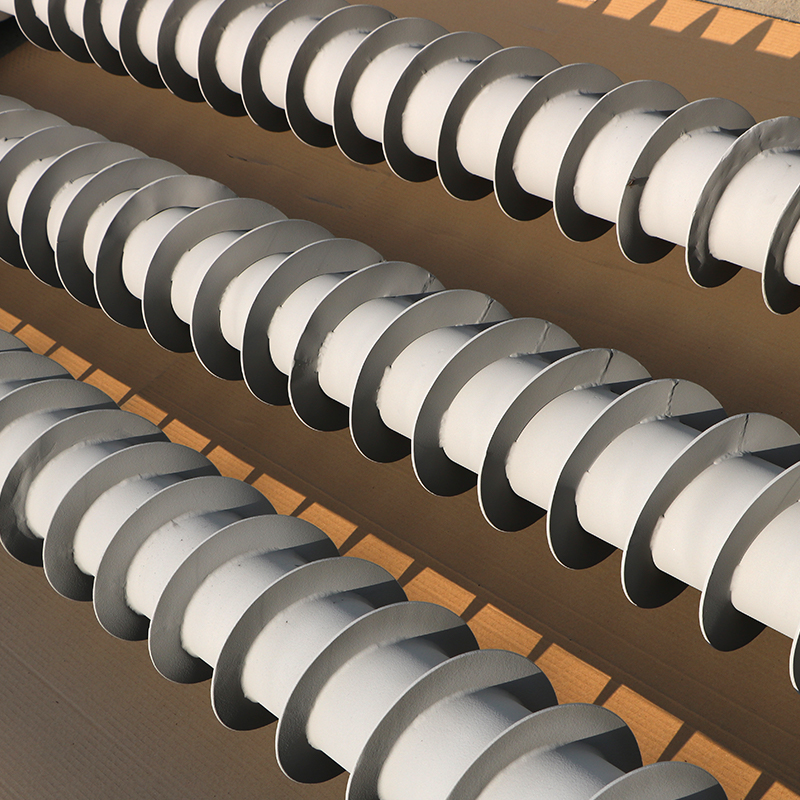
- 55-62 HRC - plungers, drawing rollers, screw feeders, extrusion screws and barrels, can tooling and laminar-flow rollers.
- Special grades - SD-NiB for high-temperature, corrosion-resistant sealing rings; SD-Ni8700 with about 32.5 % Mo for nuclear service where corrosion, oxidation and radiation resistance matter; SD-Ni220M1 as a plasma welding powder for glass moulds.
Mixing nickel-based powder with carbide additions pushes deposit hardness higher and is a common route for components facing abrasive slurry or mineral contact. The Nickel-based Tungsten Carbide Alloy Powder range covers those composite systems.
Grade Reference: Hardness, Chemistry and Typical Service
Nickel is the balance in each composition; the figures below are nominal key elements in weight percent, with the hardness value stated as the working target for the deposit.
| Grade |
Hardness (HRC) |
Key alloying elements (wt%) |
Typical service |
| SD-Ni25 |
25 |
Cr 3.5, Si 8, Fe 1.5, B 1.5 |
Glass moulds, forming dies |
| SD-Ni35 |
35 |
Cr 10.5, Si 3.5, Fe 10, B 2 |
Glass moulds, forming dies |
| SD-Ni45 |
45 |
Cr 12, Si 4, Fe 10, B 2.4 |
Exhaust valve seats, plungers |
| SD-Ni55 |
55 |
Cr 15.5, Si 4, Fe 14, Mo 3, B 3 |
Moulds, can tooling, plungers, exhaust valves |
| SD-Ni60 |
59 |
Cr 15.5, Si 4, Fe 15, B 3.5 |
Plungers, drawing rollers, mechanical wear parts |
| SD-Ni60B |
58 |
Cr 17, Si 3, Fe 20, B 4 |
Valve plates, mechanical wear parts |
| SD-Ni60M |
60 |
Cr 17, Si 4, Fe 15, B 3.2 |
Laminar-flow rollers, drawing rollers |
| SD-Ni62 |
61 |
Cr 15.5, Si 3.8, Fe 10.5, Mo 14, B 4 |
Paper brake wheels, shovel teeth |
| SD-Ni65 |
62 |
Cr 16, Si 4, Fe 5, Mo 15, B 3.2 |
Screw feeders, plungers, wear parts |
| SD-Ni220M1 |
26 |
Cr 4, Si 3, Fe 3, Mo 0.5, B 1 |
Plasma welding powder for glass moulds |
| SD-Ni830 |
30 |
Cr 2.5, Si 2.6, Fe 1, B 1.4 |
Slide rails, gear teeth |
| SD-Ni850 |
50 |
Cr 11, Si 4, Fe 2.7, B 2.2 |
Pump shafts, pulp knives, valves, screw rods |
| SD-Ni855S |
52 |
Cr 18, Si 5, Fe 3, Mo 5, B 1.8 |
Screws, seats |
| SD-Ni860 |
59 |
Cr 15, Si 4.3, Fe 4, B 3.1 |
Extrusion screws and barrels, pump impellers, plungers |
| SD-Ni86325 |
57 |
Cr 16, Si 4, Cu 3, Fe 4.5, Mo 3, B 3.5 |
Corrosion-resistant pump shafts, bearing sleeves |
| SD-Ni880 |
40 |
Cr 23, Si 2.5, Fe 1, Mo 3, W 7, B 1 |
Valves |
| SD-Ni8700 |
54 |
Cr 15.5, Si 3.4, Fe 1.5, Mo 32.5, B 1.5 |
Nuclear service: corrosion, oxidation and radiation resistance |
Where a drawing or a maintenance specification fixes the chemistry, we match that specification rather than the standard grade, and the hardness target is confirmed on a deposit sample before the batch is released.
Matching Grade to Deposition Process
Nickel-based self-fluxing powders are built around boron and silicon, which lower the melting point so the deposit fuses and wets the substrate. That chemistry suits fusion processes; for pure thermal spray or laser cladding the same family is supplied with adjusted boron and silicon so the coating does not over-melt.
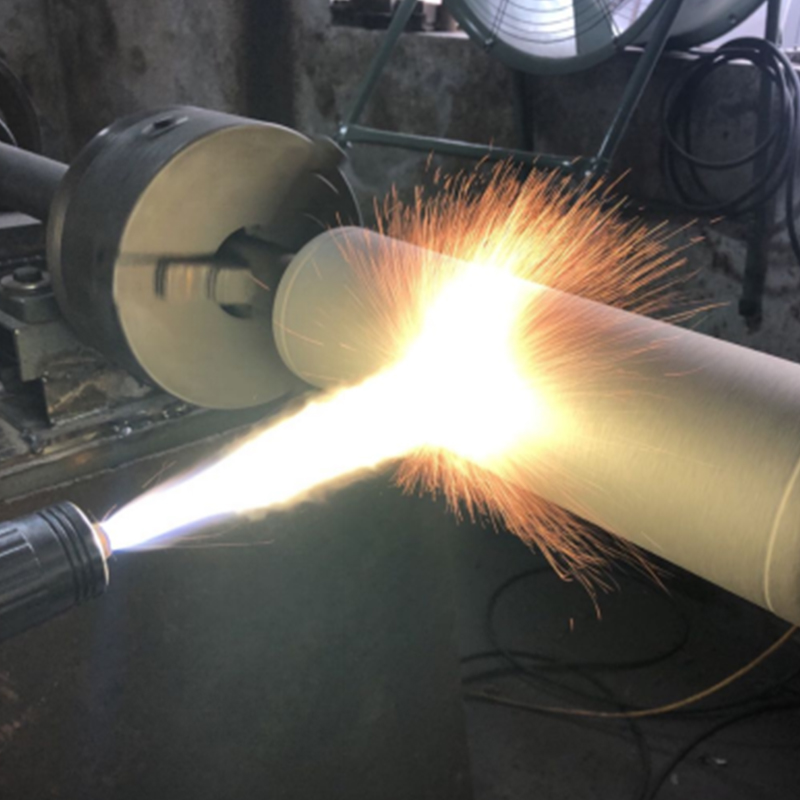
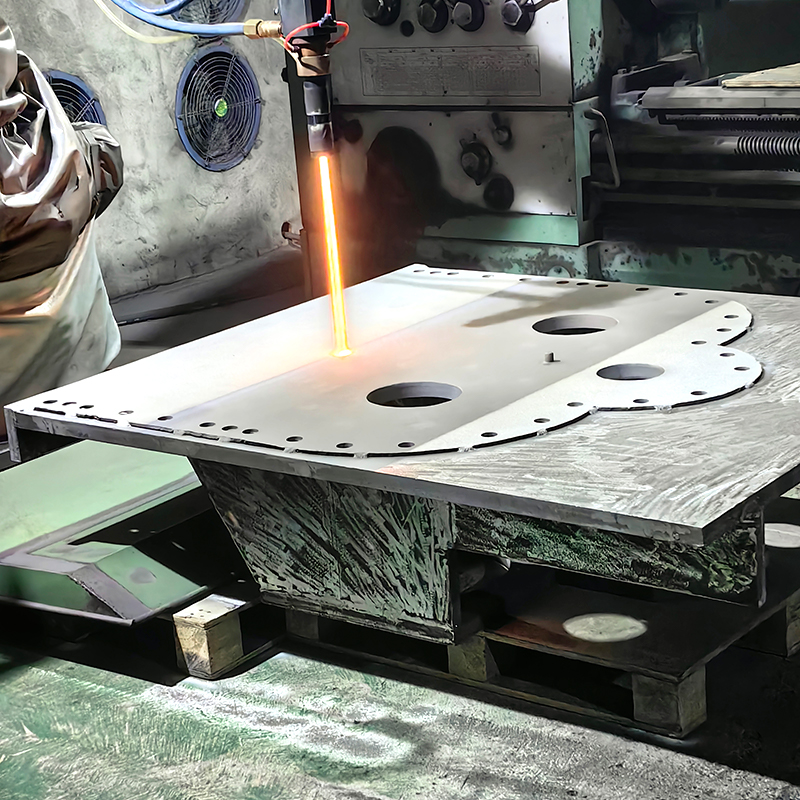
- Oxy-acetylene spray welding (powder surfacing) - a standard torch with an attached powder feeder feeds powder into the flame; the result is a smooth, well-densified layer with a metallurgical bond, widely used on glass moulds, cast iron parts and cylindrical coatings.
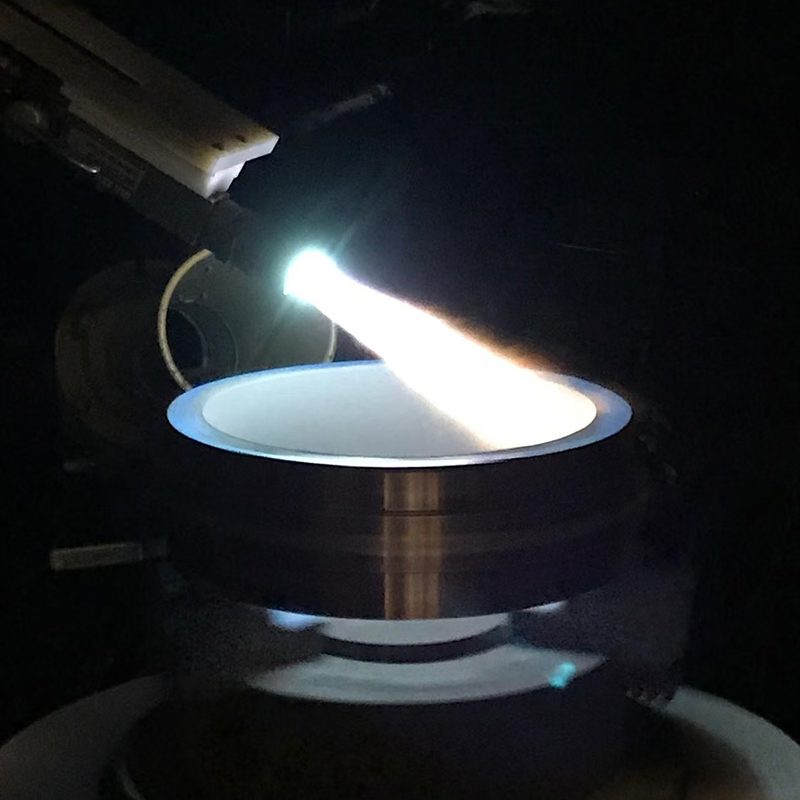
- Plasma spraying - an arc at roughly 15,000 K gives coating density around 98 %, used where a fully fused layer is not practical.
- Supersonic flame spray (HVOF / HVAF) - dense, low-oxide coatings for shafts, rolls and plungers.
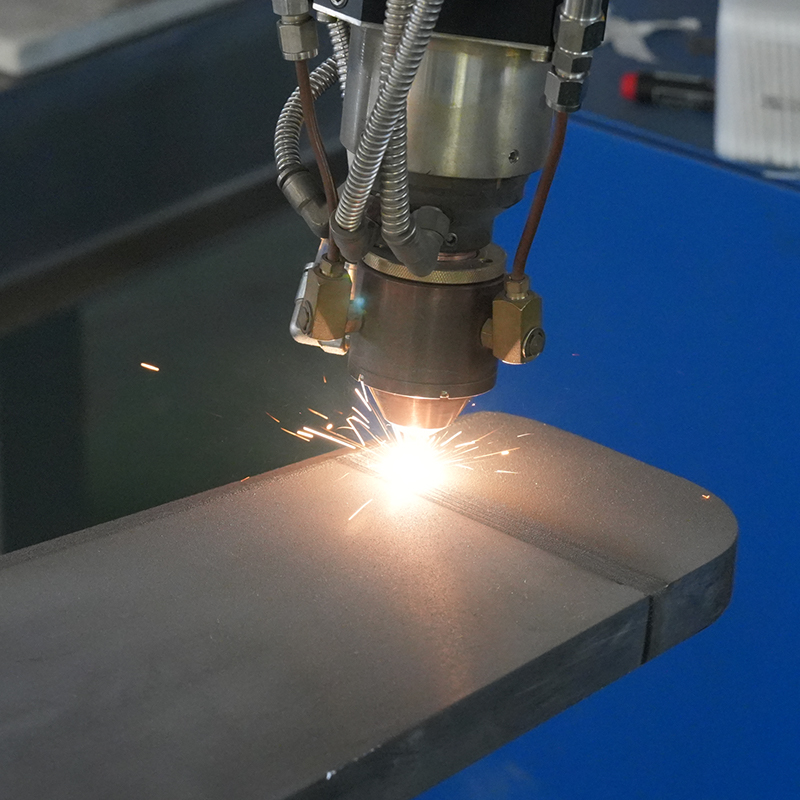
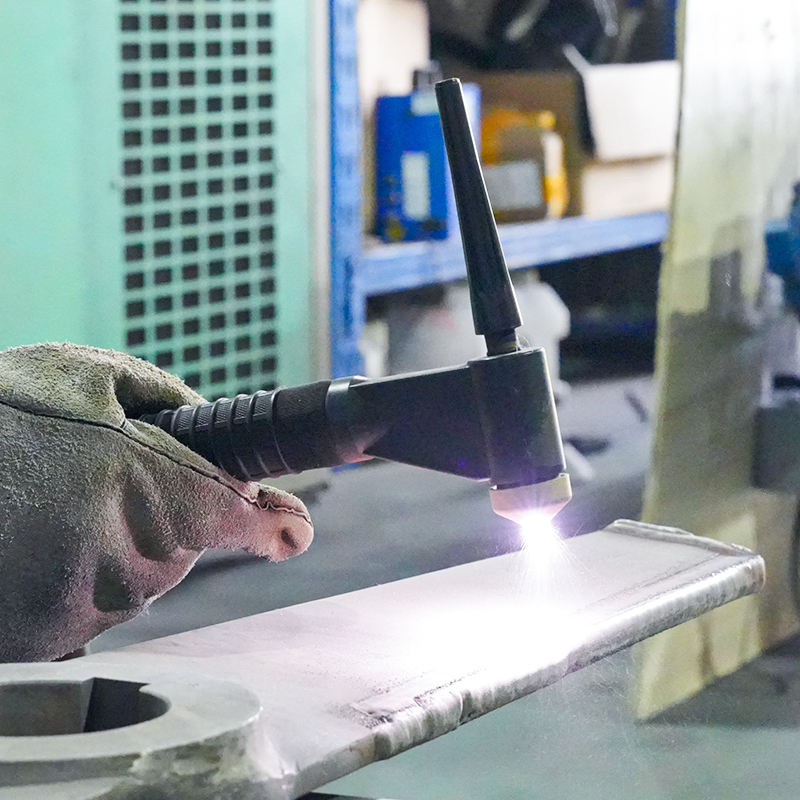
- Plasma cladding and laser cladding - low dilution and a narrow heat-affected zone, used to rebuild worn shafts and tooling.
- Powder metallurgy and 3D printing - gas-atomised nickel powders with a controlled particle size distribution.
Our own cladding work runs on five machines, including an ultra-high-speed unit with a maximum processing speed of 200 m/min and a robotic cell built on a TruDisk 4002 disc laser with a six-axis robot. That experience feeds back into powder specification, because we know which cut and which oxygen level a given cladding head will tolerate. For laser-based repair work, the Laser Cladding Powder range is the relevant starting point.
Powder Manufacture, Morphology and Particle Size
Three production lines cover the range: vacuum melting and atomisation, gas (aerosol) atomisation and water atomisation. The route from raw material to screened powder is automated, which keeps batch-to-batch behaviour consistent.
- Gas atomisation - high-pressure inert gas breaks the melt into droplets that solidify as spherical and sub-spherical particles; cyclone separation and classification control the particle size distribution and give the flowability needed for laser cladding and 3D printing.
- Vacuum line - melting and atomisation under vacuum or gas protection for oxygen-sensitive chemistries.
- Water atomisation - high-speed water jets quench and break the melt; the collected wet powder is dried to give low oxygen content and high sphericity at higher output for hardfacing consumables.
Particle size cut is agreed per process rather than fixed by catalogue. A torch-fed spray welding powder, an HVOF powder and a laser cladding powder of the same grade will differ in cut and in flow behaviour.
Substrate and Workpiece Considerations
Nickel-based deposits bond to carbon and low-alloy steels, cast iron, stainless steels and nickel alloys. Three variables decide whether the result holds: pre-heat and interpass temperature, dilution from the melt, and the machining allowance left for finishing.
- Cast iron and older machine parts - oxy-acetylene powder surfacing is the usual route because it limits dilution and can be carried out on site.
- Glass moulds and forming dies - low-hardness grades are selected so the deposit can be cut and polished back to the mould profile.
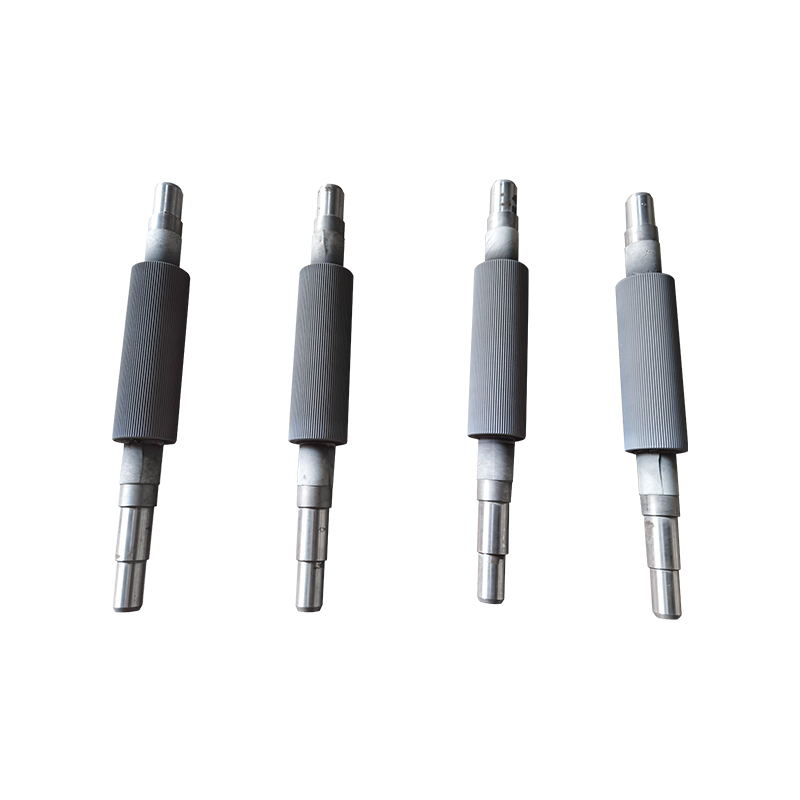
- Shafts, plungers and rollers - mid to high hardness grades applied in overlapping passes, then ground.
- High-temperature or corrosive media - high-molybdenum grades such as SD-Ni8700 or SD-NiB, where the deposit must resist oxidation as well as wear.
Quality Control and Batch Verification
Our management system is built around ISO 9001/9002 requirements, and production is controlled from melt chemistry through to the finished powder. Testing covers chemical composition by ICP and by carbon, sulphur, hydrogen, oxygen and nitrogen analysis; particle size distribution by laser diffraction; morphology and internal defects by industrial CT; and deposit hardness on Vickers and Rockwell-type testers. Tensile testing is available for material data packages.
Each batch is checked against the agreed specification, and the recorded chemistry, cut, morphology and hardness data is what keeps a repeat order identical to the first delivery.
Customization: Pure Nickel, Blends and Composite Systems
Beyond the standard grades we produce pure nickel powder and adjusted nickel-based chemistries, and we blend nickel powder with carbide for composite deposits. Chemistry and particle size range are set to the customer's requirement rather than to a fixed catalogue, which is how glass mould shops, valve manufacturers and hardfacing service companies each end up with their own specification.
Two adjacent nickel systems matter for projects that move past hardfacing: Nickel-based Superalloy Powder for high-temperature structural and additive work, and the carbide composite grades already described for abrasive service.
Information We Use to Configure Your Solution
A powder specification and a quotation are prepared from the working point, not from a grade name alone. These inputs let us fix chemistry, cut and packaging in one pass.
- Component and base material - part type, substrate grade, and whether the job is new manufacture or repair.
- Wear or failure mode - sliding abrasion, impact, corrosion, oxidation, high temperature, or a combination of these.
- Process and equipment - torch spray welding, HVOF or HVAF, plasma spray, PTA, laser cladding head, or press-and-sinter.
- Target deposit - hardness in HRC, deposit thickness per pass and total, finishing allowance, and any maximum dilution limit.
- Service conditions - operating temperature, medium, pH, and whether thermal cycling occurs.
- Powder requirements - particle size cut, flowability or apparent density target, oxygen limit, and any chemistry range fixed by an internal standard.
- Quantity - trial quantity, batch size, annual volume and packaging format.
- Documentation - analysis report, material data sheet or deposit test results required with the delivery.
Packaging, Delivery and Technical Support
Powder is packed in sealed containers that limit moisture pickup and is labelled with grade, batch number and particle size cut, so stores can match a container to a job without opening it. Delivery scope is agreed per order: trial lots for process qualification, production lots for ongoing maintenance, and matched batches where the same grade runs across several lines.
Technical support covers grade selection, deposit trials and process parameters for spray welding and cladding. When a customer is setting up a new hardfacing cell, we work backwards from the equipment interface - torch or gun type, feed system and travel speed - and specify the powder to suit it.
Frequently Asked Questions
Which nickel-based grade is used for glass moulds?
The 20-36 HRC band covers glass moulds and forming dies: SD-Ni25, SD-Ni35, SD-Ni820, SD-Ni822, SD-Ni828 and SD-Ni837. These deposits are machinable and hand-grindable, hold mould detail, and tolerate the repeated thermal cycling of continuous glass contact. SD-Ni220M1 is the plasma welding powder for the same application where a plasma torch is used.
What hardness can a nickel-based deposit reach, and how is it controlled?
Between roughly 20 and 62 HRC. Hardness is set by boron, carbon, chromium and molybdenum content: higher boron and carbon raise as-deposited hardness but reduce machinability, which is why glass mould work stays in the low band and screw feeders sit at the top. Hardness is verified on Vickers and Rockwell-type testers.
Can you supply pure nickel powder or a chemistry outside the standard grades?
Yes. We produce pure nickel powder and adjusted nickel-based chemistries, and we set both the chemical composition and the particle size range to the customer's requirement. Send the target chemistry range, the process and the cut, and we will confirm what can be produced and tested.
Which particle size cut should be specified?
It follows the process. Torch-fed spray welding tolerates a coarser cut, HVOF and plasma spraying need a tighter distribution with low oxygen, and laser cladding and 3D printing need the most spherical, free-flowing powder. We agree the cut against the feed system and the deposition head rather than quoting a single figure for the grade.
How do nickel-based and cobalt-based powders compare for valve seats and hot wear?
Both families are used. Nickel-based grades such as SD-Ni45, SD-Ni55 and SD-Ni60 are common for exhaust valve seats, plungers and valve plates, while cobalt-based grades are often chosen where hot hardness and metal-to-metal wear dominate. We supply both and match the grade to the service temperature and the medium.
What does a first order include?
A defined grade and particle size cut, batch chemical and particle size analysis, deposit hardness data where a trial deposit is made, sealed packaging labelled by grade and batch, and a trial quantity sized for process qualification before production volumes are committed.


 English
 русский
 عربى