English
 русский
 عربى
عربىContent
Core Characteristics and Advantages of Nickel-Based Powders
Nickel-based metal powders are indispensable in modern engineering due to their exceptional ability to maintain structural integrity under extreme conditions. Unlike standard steel powders, nickel-based alloys offer a unique combination of high-temperature strength, excellent thermal fatigue resistance, and superior oxidation resistance. These powders are often alloyed with elements such as chromium, molybdenum, tungsten, and aluminum to enhance specific properties like creep resistance or localized corrosion protection. Their versatile nature allows them to perform reliably in environments where temperatures frequently exceed 600°C, making them the material of choice for "superalloy" applications.
One of the defining features of these powders is their face-centered cubic (FCC) crystal structure, which remains stable from cryogenic temperatures up to the melting point. This stability prevents phase transformations that could lead to brittleness or dimensional instability during thermal cycling. Furthermore, nickel's high tolerance for alloying elements enables the creation of complex microstructures, such as the gamma-prime (γ') precipitate phase, which significantly increases mechanical strength by impeding dislocation movement within the metal matrix.
Commonly Used Nickel-Based Alloy Groups
The selection of a nickel-based metal powder depends heavily on the intended environmental stressors. Below is a comparison of the most prevalent alloy families used in powder metallurgy and additive manufacturing:
| Alloy Category | Key Examples | Primary Performance Trait |
| Nickel-Chromium | Inconel 625, 718 | High tensile and rupture strength |
| Nickel-Molybdenum | Hastelloy C276, B3 | Superior acid and chemical resistance |
| Nickel-Copper | Monel 400, K500 | Resistance to seawater and hydrofluoric acid |
Inconel 718: The Industry Standard
Inconel 718 is perhaps the most widely utilized nickel powder. It is a precipitation-hardenable alloy containing significant amounts of iron, niobium, and molybdenum. Its popularity stems from its excellent weldability and its resistance to post-weld cracking, which makes it ideal for Laser Powder Bed Fusion (LPBF) and other 3D printing processes. It maintains high strength up to 700°C and is frequently found in turbine disks and high-strength bolts.
Hastelloy Series for Corrosive Processing
For the chemical processing industry, Hastelloy powders provide unparalleled protection against aggressive media. These powders are designed to resist pitting, stress-corrosion cracking, and oxidizing atmospheres. They are commonly used to coat or manufacture components for reactors, heat exchangers, and valves where standard stainless steels would fail rapidly.
Production Methods and Powder Quality
The performance of a nickel-based metal powder is dictated by its morphology, particle size distribution (PSD), and chemical purity. Different manufacturing techniques yield powders suited for different industrial applications:
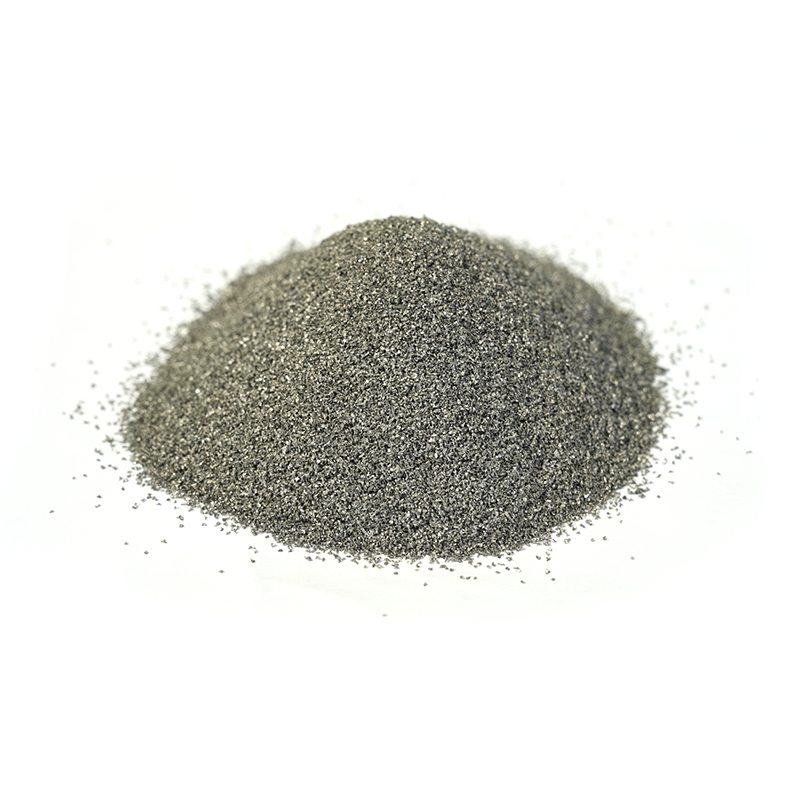
- Gas Atomization: This is the most common method for producing high-quality spherical powders. Molten nickel alloy is disintegrated by high-pressure inert gas (typically argon or nitrogen). This results in highly spherical particles with excellent flowability, essential for consistent layers in 3D printing.
- Plasma Rotating Electrode Process (PREP): This method produces powders with the highest level of spherical perfection and minimal ceramic inclusions. It is often reserved for critical aerospace applications where fatigue life is the primary concern.
- Water Atomization: While more cost-effective, water atomization produces irregular, acicular shapes. These powders are better suited for traditional "press and sinter" metallurgy where green strength (the ability of the powder to hold its shape before firing) is required.
Key Industrial Applications
The adoption of nickel-based metal powders has revolutionized several high-tech sectors by allowing for more efficient designs and longer component lifespans. The transition from bulk machining to powder-based manufacturing has enabled the creation of internal cooling channels and complex geometries that were previously impossible to produce.
Aerospace and Gas Turbines
In the aerospace sector, nickel powders are used to manufacture turbine blades, vanes, and combustion chambers. These components must withstand the centrifugal forces of high-speed rotation while being blasted by burning fuel. The use of Inconel powders in 3D printing allows engineers to consolidate multiple parts into a single lightweight structure, reducing engine weight and increasing fuel efficiency.
Oil and Gas Extraction
Subsea drilling environments are incredibly harsh, involving high pressure and exposure to sour gas (H2S). Nickel-based powders are used for cladding (overlaying) cheaper steel components with a protective layer of corrosion-resistant alloy. This "laser cladding" technique extends the life of drill bits, pump shafts, and valves, preventing catastrophic failures in deep-sea operations.
Medical and Renewable Energy
While less common than titanium in implants, certain nickel-chromium powders are used in specialized medical instruments and dental prosthetics due to their wear resistance. In the renewable sector, nickel powders are finding roles in concentrated solar power (CSP) plants, where they serve in heat-transfer systems that operate at extremely high temperatures to generate steam for electricity.