English
 русский
 عربى
عربىContent
- 1 What Is Carbide Metal Powder and Why Is It So Widely Used?
- 2 The Main Types of Carbide Metal Powder and Their Properties
- 3 How Carbide Metal Powder Is Manufactured
- 4 Key Specifications and Properties to Evaluate When Sourcing Carbide Powder
- 5 Major Applications of Carbide Metal Powder Across Industries
- 6 Cemented Carbide Grades: How WC Powder Specifications Translate to Tool Performance
- 7 Sourcing Carbide Metal Powder: What to Look for in a Supplier
- 8 Safety and Handling Considerations for Carbide Metal Powder
What Is Carbide Metal Powder and Why Is It So Widely Used?
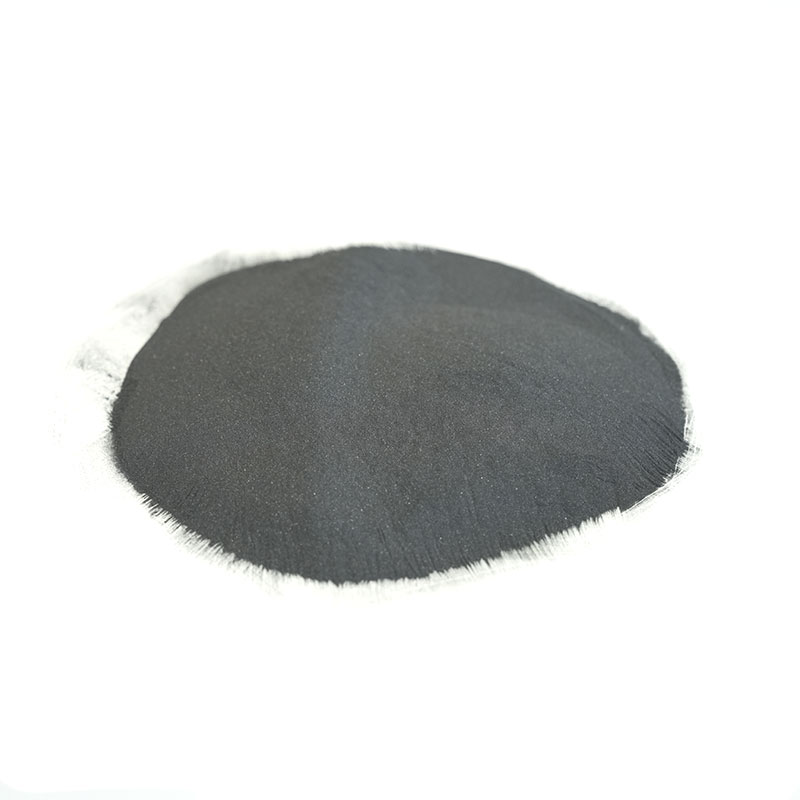
Carbide metal powder is a category of advanced industrial powder material made by combining a metal element — most commonly tungsten, titanium, silicon, chromium, or vanadium — with carbon to form an extremely hard, heat-resistant ceramic-metallic compound. The resulting carbide compound is then processed into fine powder form, which can be used as a raw material for sintering, thermal spray coating, additive manufacturing, or blending into composite materials. Carbide powders sit at the intersection of metallurgy and advanced ceramics, combining the toughness characteristics of metals with the hardness and wear resistance typically associated with ceramics.
The defining characteristic that makes carbide metal powder so commercially important is hardness. Carbide compounds rank among the hardest materials known — tungsten carbide, for example, has a Vickers hardness of 1,700–2,400 HV, putting it far above tool steels and most other engineering materials. This extreme hardness, combined with high melting points, excellent wear resistance, and good thermal conductivity in many carbide types, makes carbide powder the foundation of the global cutting tool industry and a critical material in aerospace, mining, oil and gas, thermal spray, and powder metallurgy applications.
Global demand for carbide metal powder — particularly tungsten carbide powder — has grown steadily as manufacturing industries push toward harder workpiece materials, tighter tolerances, and longer tool life expectations. According to industry data, tungsten carbide alone accounts for roughly 60% of total global tungsten consumption, reflecting just how central this one carbide powder type is to modern industrial production.
The Main Types of Carbide Metal Powder and Their Properties
Not all carbide powders are the same compound or serve the same purpose. The type of metal bonded to carbon determines the resulting carbide's hardness, toughness, thermal properties, and chemical stability. Here is a breakdown of the most commercially significant carbide powder types.
Tungsten Carbide Powder (WC)
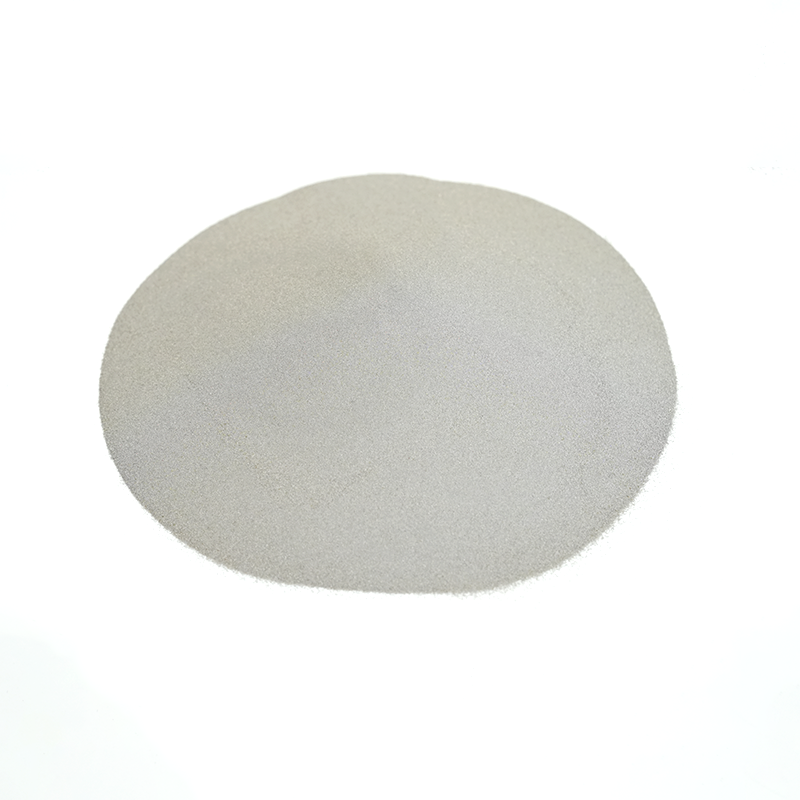
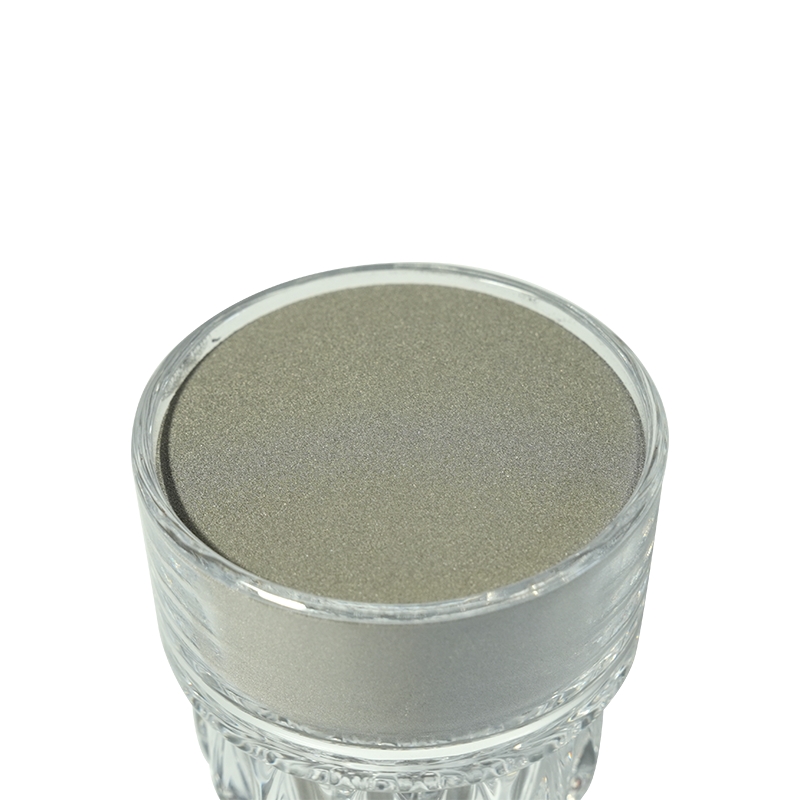
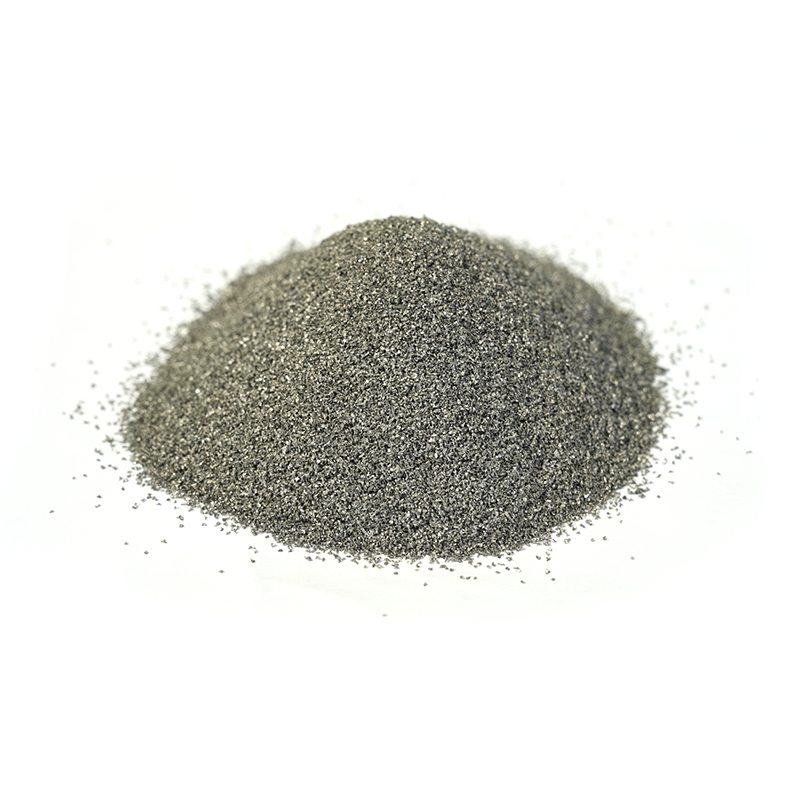
Tungsten carbide powder is by far the most widely produced and commercially important carbide metal powder. It is the primary raw material for cemented carbide — also called hard metal — which is used to make cutting tool inserts, drill bits, end mills, wear parts, and mining teeth. WC powder is produced by carburizing tungsten metal powder in a hydrogen/methane atmosphere at temperatures of 1,400–1,600°C, producing a grey crystalline powder with particle sizes typically ranging from submicron (0.1–0.5 µm) to coarse (6–20 µm) depending on the intended application. Finer WC powder grades produce harder, more wear-resistant cemented carbide with lower toughness, while coarser grades give better toughness for interrupted cutting and impact applications. WC is almost never used alone — it is blended with a cobalt (Co) binder and sometimes additional carbides before sintering into cemented carbide parts.
Titanium Carbide Powder (TiC)
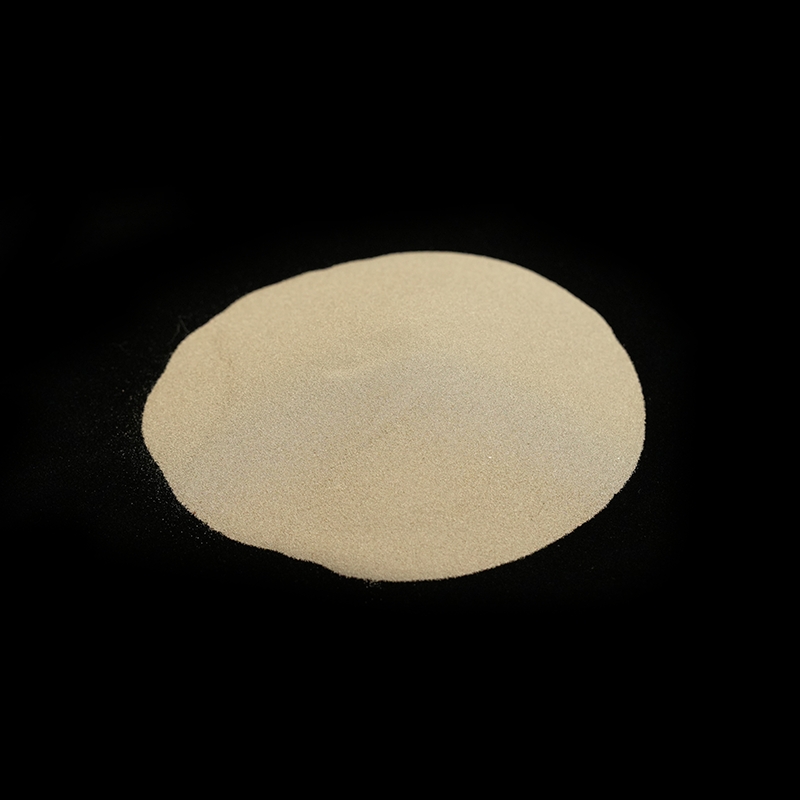
Titanium carbide powder is a golden-colored powder with hardness comparable to tungsten carbide (2,800–3,200 HV) but with a significantly lower density (4.93 g/cm³ vs. WC's 15.6 g/cm³). This low density makes TiC an attractive additive in cemented carbide formulations for aerospace and automotive cutting applications where tool weight matters. TiC is also used in cermet cutting tools — composites of ceramic and metal — where it forms the hard phase with a nickel or molybdenum binder, producing tools with excellent chemical stability and heat resistance for high-speed machining of steel. Additionally, titanium carbide powder is used in surface hardening coatings applied by physical vapor deposition (PVD) or chemical vapor deposition (CVD).
Silicon Carbide Powder (SiC)
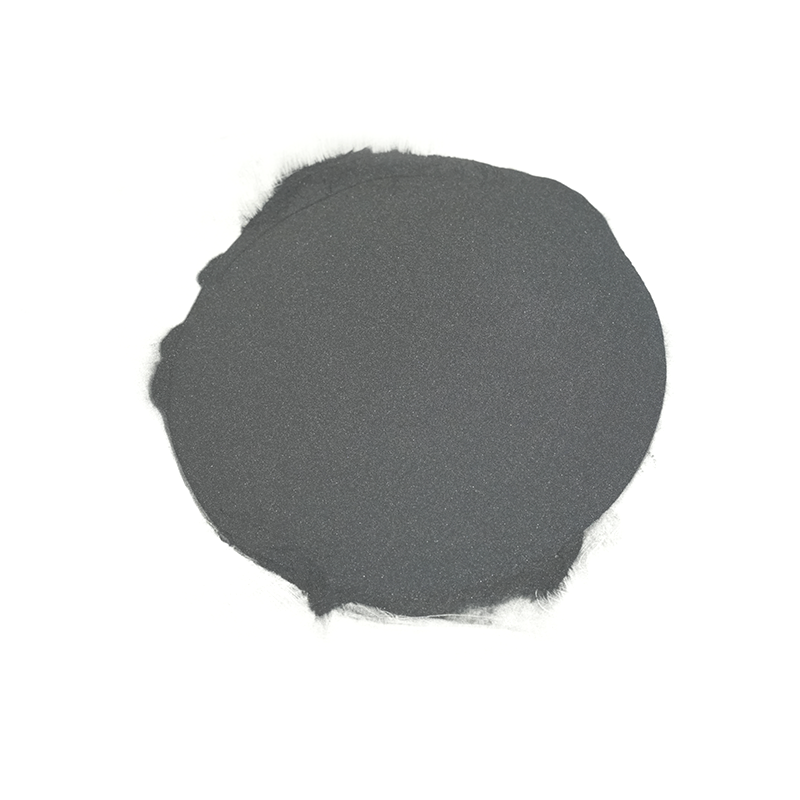
Silicon carbide powder occupies a somewhat different market position from WC and TiC — it is primarily a structural ceramic material rather than a cutting tool binder phase. SiC powder is produced by the Acheson process, in which silica sand and petroleum coke are reacted at very high temperatures (around 2,000°C) in an electric furnace. The resulting SiC is crushed and milled to the required particle size. SiC powder is used to produce sintered silicon carbide components for pump seals, bearings, and heat exchangers; as an abrasive in grinding wheels and abrasive papers; as a reinforcing phase in metal matrix composites (MMCs); and increasingly as a key material in power electronics and semiconductor substrates. SiC powder for abrasive applications is sold in standardized grit sizes, while SiC for sintered components and MMCs uses much finer powders with controlled particle size distributions.
Chromium Carbide Powder (Cr₃C₂)
Chromium carbide powder is the dominant carbide type in high-temperature wear and corrosion resistant coatings applied by thermal spray. Unlike WC-Co coatings that oxidize and soften above about 500°C, Cr₃C₂-NiCr coatings maintain their hardness and wear resistance at temperatures up to 850°C, making them indispensable for hot section components in gas turbines, boiler tubes, exhaust fans, and other high-temperature wear environments. Chromium carbide powder is typically supplied pre-blended with a NiCr alloy binder (usually 75/25 or 80/20 Cr₃C₂/NiCr) in agglomerated and sintered or clad powder form ready for high-velocity oxy-fuel (HVOF) or plasma spray application.
Vanadium Carbide Powder (VC) and Tantalum Carbide Powder (TaC)
Vanadium carbide and tantalum carbide powders are used primarily as grain growth inhibitors in cemented carbide formulations. When added in small amounts (typically 0.3–1.0 wt%) to WC-Co blends during milling, VC prevents excessive grain growth during sintering, allowing manufacturers to achieve very fine-grained microstructures with superior hardness and edge retention. TaC and niobium carbide (NbC) serve a similar grain-inhibiting function and also improve the high-temperature properties of cemented carbide tools used in steel and stainless steel cutting. These carbide powders are specialty additives used in relatively small quantities but have a significant impact on the final cemented carbide microstructure and performance.
How Carbide Metal Powder Is Manufactured
The manufacturing process for carbide powder directly determines its purity, particle size, particle size distribution, and morphology — all of which critically affect the properties of parts made from it. Understanding the production methods helps buyers evaluate powder quality and match the right powder to their process.
Carburization (for WC, TiC, and other metal carbides)
Carburization is the most common production method for tungsten carbide and titanium carbide powders. The metal oxide (tungsten trioxide WO₃ or titanium dioxide TiO₂) is first reduced to metal powder using hydrogen at high temperature, then mixed with carbon black and heated in a hydrogen or inert atmosphere furnace at temperatures between 1,400°C and 1,600°C. Carbon diffuses into the metal lattice to form the carbide phase. The final WC or TiC particle size is controlled by the grain size of the starting metal powder and the process temperature — lower temperatures and finer starting powders produce submicron carbide, while higher temperatures and coarser starting materials give coarser carbide grades.
Mechanical milling and attritor milling
After initial synthesis, carbide powders often undergo further milling to achieve the required particle size and particle size distribution for their intended application. Ball milling and attritor milling use WC grinding media and an organic milling liquid (usually hexane or ethanol) to break down agglomerates and reduce average particle size. Milling time, media size, and rotational speed are controlled to hit precise particle size targets — submicron powders for ultra-fine cemented carbide, medium grades for general cutting tools, and coarser grades for thermal spray feedstock.
Spray drying and agglomeration for thermal spray powders
Carbide powders used as thermal spray feedstock must be in the form of free-flowing, spherical agglomerates with a controlled particle size range — typically 15–45 µm or 45–75 µm for HVOF spraying. This morphology is achieved by spray drying: the fine carbide and binder powder blend is mixed with an organic binder in water to form a slurry, which is then atomized through a nozzle into a hot drying chamber. The droplets dry in flight to form spherical agglomerated granules. These agglomerates are then sintered or densified in a furnace to give them sufficient mechanical strength to survive the feeding and spraying process without fracturing.
Key Specifications and Properties to Evaluate When Sourcing Carbide Powder
When purchasing carbide metal powder for industrial or manufacturing use, a set of material specifications defines whether the powder will perform reliably in your process. Here are the critical parameters to evaluate and what they mean in practice.
| Specification | Typical Measurement Method | Why It Matters |
| Average particle size (d50) | Laser diffraction (CILAS, Malvern) | Controls sintered grain size and hardness/toughness balance |
| Particle size distribution (d10, d90) | Laser diffraction | Narrow distribution = consistent sintering; wide = variable properties |
| Total carbon content | LECO carbon analyzer | Deviation from stoichiometric carbon causes eta phase or free carbon defects |
| Free carbon content | LECO / wet chemistry | Excess free carbon weakens sintered cemented carbide |
| Oxygen content | Inert gas fusion (LECO) | High oxygen = poor sinterability and porosity in final parts |
| Specific surface area (BET) | BET nitrogen adsorption | Correlates with particle size; high BET = very fine powder |
| Apparent density / tap density | Hall flowmeter, tap density tester | Affects powder flowability and pressing behavior in die compaction |
| Trace metal impurities | ICP-OES or ICP-MS | Iron, nickel, sulfur contamination degrades sintered part properties |
| Morphology / particle shape | SEM (scanning electron microscopy) | Spherical for thermal spray; angular for pressing and sintering |
Major Applications of Carbide Metal Powder Across Industries
The industrial applications of carbide powder span an enormous range of sectors and end products. Understanding where and how carbide powder is used provides context for the specifications required in each application.
Cemented carbide cutting tools and wear parts
The largest single application for tungsten carbide powder is in the manufacture of cemented carbide (hardmetal) cutting tools and wear parts. The process begins by milling WC powder together with cobalt powder (typically 3–25 wt% Co depending on the application) and any additive carbides such as TaC, NbC, or VC in a ball mill or attritor with an organic binder and milling liquid. The resulting slurry is spray-dried into a free-flowing granulated blend, which is then die-pressed or cold isostatic pressed (CIP) into green compacts and sintered under vacuum at approximately 1,350–1,500°C. Sintering densifies the compact to near-theoretical density through liquid-phase sintering, with the cobalt forming the binder phase that holds the WC grains together. The resulting cemented carbide is then ground to final dimensions using diamond wheels and optionally coated by CVD or PVD with TiN, TiCN, Al₂O₃, or other hard coatings.
Thermal spray coatings
Thermal spray is the second-largest application for carbide metal powder. In HVOF (high-velocity oxy-fuel) spraying, carbide powder feedstock — most commonly WC-Co, WC-CoCr, or Cr₃C₂-NiCr — is injected into a high-velocity combustion flame that heats and accelerates the powder particles to high velocity before they impact the substrate surface. The particles flatten and solidify rapidly on impact, building up a dense, low-porosity coating with excellent wear and corrosion resistance. HVOF WC-Co coatings are used on aircraft landing gear components, hydraulic cylinder rods, pump plungers, paper machine rolls, and many other surfaces subject to severe sliding wear. Plasma spray is used for higher-temperature applications and for SiC and Cr₃C₂ coatings that benefit from the plasma process's higher energy output.
Additive manufacturing with carbide powder
Additive manufacturing of carbide and cemented carbide parts is a rapidly growing application area. Binder jetting, direct energy deposition (DED), and selective laser sintering (SLS) processes have all been adapted for WC-Co and WC-Ni powder systems, allowing complex cutting tool geometries, wear components, and nozzle inserts to be printed directly from powder without the need for pressing tooling. The powder requirements for AM are more demanding than for press-and-sinter: spherical morphology, narrow particle size distribution (typically 15–45 µm for binder jetting), high flowability, and low oxygen content are all critical. While AM-produced cemented carbide still faces challenges around achieving the same density and properties as conventionally sintered parts, the technology is advancing rapidly and is already commercially deployed for complex geometries that cannot be pressed conventionally.
Mining, drilling, and oil and gas tooling
Mining drill bits, rotary percussive inserts, road milling picks, and oil and gas drill bits all rely heavily on cemented carbide grades produced from WC powder with higher cobalt contents (10–25 wt%) for superior toughness under impact loading. These grades sacrifice some hardness compared to cutting tool grades but gain the fracture toughness needed to survive the extreme impact and abrasive conditions encountered in rock drilling and excavation. Coarser WC powder grades (3–6 µm and above) are typically used in these applications to maximize toughness.
Metal matrix composites (MMC)
Silicon carbide powder and titanium carbide powder are used as reinforcing phases in aluminum and titanium metal matrix composites. Adding SiC or TiC particles to a lightweight metal matrix significantly increases its stiffness, hardness, and wear resistance without the weight penalty of using a solid carbide or steel component. SiC-reinforced aluminum MMCs are used in aerospace structural components, brake rotors, and electronic heat sinks. TiC-reinforced titanium MMCs are applied in aerospace and biomedical applications where the combination of low density and high stiffness is particularly valuable.
Cemented Carbide Grades: How WC Powder Specifications Translate to Tool Performance
For buyers in the cutting tool and wear parts industry, understanding how WC powder grain size and cobalt content interact to define cemented carbide grade properties is essential for selecting the right powder or the right grade for a given application.
- Ultra-fine grades (WC d50 < 0.5 µm, Co 6–10%): Maximum hardness (1,800–2,000 HV30), excellent wear resistance, moderate toughness. Used for micro-drills, PCB drills, fine engraving tools, and precision cutting of hardened steels and composites.
- Submicron grades (WC d50 0.5–1.0 µm, Co 6–12%): High hardness with improved toughness over ultra-fine grades. The most widely used range for general-purpose end mills, drills, and turning inserts for steel and stainless steel.
- Medium grades (WC d50 1–3 µm, Co 6–15%): Balanced hardness and toughness. Standard grades for milling and turning inserts, form tools, and wear-resistant components in moderate impact applications.
- Coarse grades (WC d50 3–6+ µm, Co 12–25%): Lower hardness but high fracture toughness. Used for mining inserts, rock drilling buttons, cold-forming tools, and any application involving significant impact loading.
Sourcing Carbide Metal Powder: What to Look for in a Supplier
Carbide powder quality has a direct and measurable impact on the properties of finished parts — cutting tool life, coating adhesion, sintered density, and wear resistance all depend on consistent, on-specification powder. Choosing the right carbide powder supplier requires evaluating several factors beyond price alone.
- Analytical capabilities and certification: Reputable suppliers provide a full certificate of analysis (CoA) for every batch, covering particle size (d10/d50/d90), total carbon, free carbon, oxygen content, and key trace impurities. Suppliers with in-house LECO analyzers, laser diffraction equipment, and ICP-OES capability can control and verify their own output rather than relying on third-party testing.
- Batch-to-batch consistency: For high-volume cutting tool manufacturing, powder consistency is as important as average specification. Ask for historical Cpk data on key parameters and evaluate the supplier's statistical process control practices. A powder that meets specification on average but has wide batch-to-batch variation causes sintering problems and inconsistent tool quality.
- Raw material sourcing transparency: Tungsten is a critical mineral subject to supply chain concentration risk — a significant share of global tungsten production is concentrated in China. Suppliers who can demonstrate a diversified raw material supply chain or document the origin of their tungsten provide supply security that purely price-based sourcing cannot.
- ISO 9001 and customer-specific quality systems: ISO 9001 certification is a baseline expectation for any serious carbide powder supplier. For customers in aerospace and automotive who operate under IATF 16949 or AS9100, suppliers who have aligned their quality systems with these standards provide stronger process control and traceability.
- Technical support and application development: Leading carbide powder suppliers offer application engineering support — helping customers optimize powder selection, milling parameters, and sintering conditions for their specific grades and geometries. This is particularly valuable when developing new grades or transitioning to finer powder specifications.
- Recycled carbide powder availability: Recovered and recycled WC-Co scrap — processed back into WC and Co powder through zinc reclaim, cold stream process, or chemical methods — is a cost-effective and increasingly important supply stream. Suppliers offering recycled carbide powder with equivalent quality certification to virgin powder can provide meaningful cost savings for high-volume users.
Safety and Handling Considerations for Carbide Metal Powder
Carbide metal powders, particularly fine and ultra-fine grades, require careful handling to protect workers and maintain powder quality. The fine particle sizes that make these powders valuable also make them potential inhalation hazards and create reactivity considerations that must be managed in the workplace.
Tungsten carbide cobalt powder (WC-Co) is classified as a possible human carcinogen (Group 2A) by the International Agency for Research on Cancer (IARC) specifically in the combined WC-Co form — the co-exposure to both WC and Co together appears to be more harmful than either material alone. Workers handling WC-Co powder should use appropriate respiratory protection (minimum P100 half-mask respirator for routine handling, supplied-air respirator for high-exposure tasks), work in enclosed or ventilated environments, and undergo periodic lung function monitoring if occupational exposure is ongoing. Cobalt metal powder independently has established occupational exposure limits and is associated with hard metal lung disease (cobalt lung) in heavily exposed workers.
Silicon carbide powder used in abrasives and MMC applications generates fine silica-free dust that is less acutely hazardous than quartz-containing dusts but still requires respiratory protection during handling. Very fine SiC powders (<10 µm) should be handled in enclosed systems or with local exhaust ventilation. All carbide powders should be stored in sealed containers in dry conditions to prevent moisture uptake and oxidation of the powder surface, which can affect sintering behavior. Grounding and bonding of containers and equipment are important when handling fine powder in bulk to prevent static charge buildup.