English
 русский
 عربى
عربىContent
- 1 What Iron Based Alloy Powder Is and Why It Dominates Powder Metallurgy
- 2 Production Methods for Iron Based Alloy Powders
- 3 Principal Iron Based Alloy Powder Systems and Their Properties
- 4 Particle Characteristics and Why They Matter
- 5 Applications of Iron Based Alloy Powder Across Industries
- 6 Sintering of Iron Based Alloy Powder: What Happens and What Controls the Outcome
- 7 Quality Parameters to Specify When Sourcing Iron Based Alloy Powder
- 8 Handling and Safety Considerations for Iron Based Alloy Powders
What Iron Based Alloy Powder Is and Why It Dominates Powder Metallurgy
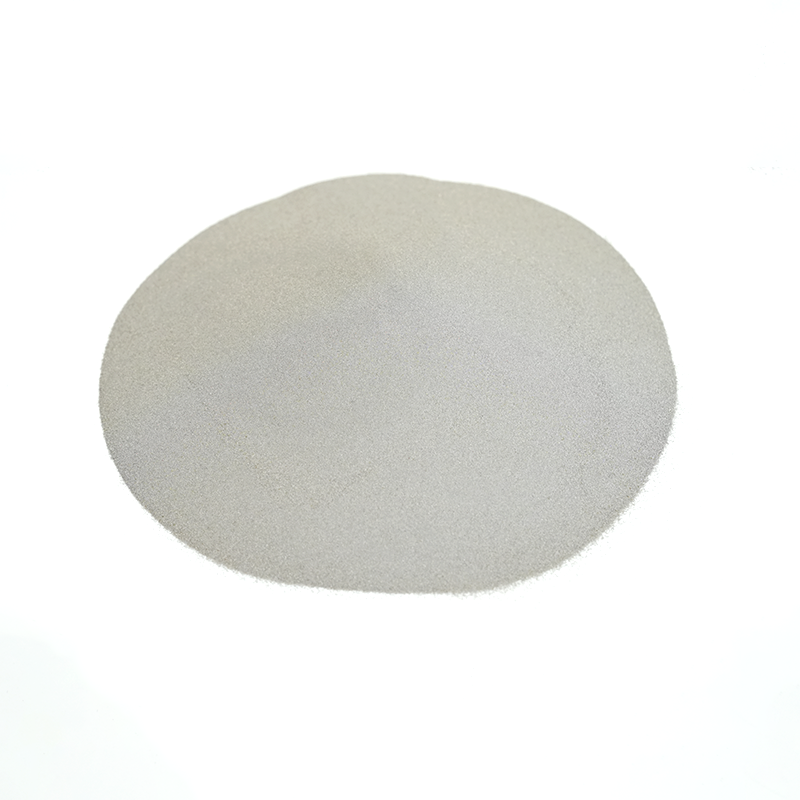
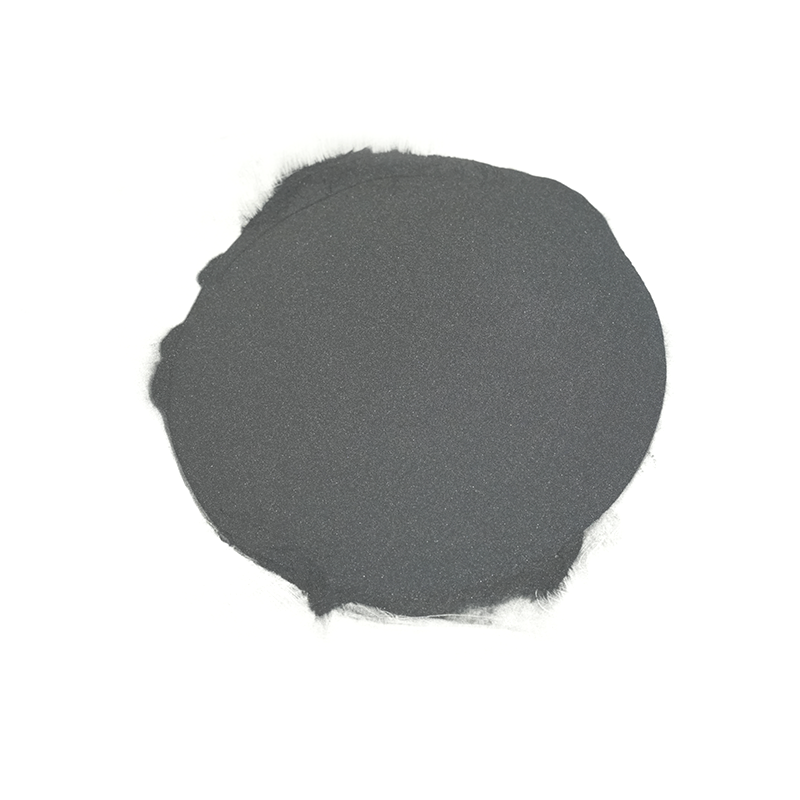
Iron based alloy powder — also referred to as ferrous alloy powder or Fe alloy powder — is a category of metallic powder in which iron is the primary constituent element, alloyed with one or more secondary elements including carbon, nickel, chromium, molybdenum, manganese, copper, silicon, or phosphorus to achieve specific mechanical, magnetic, or corrosion-resistant properties in the finished component or coating. These powders are the foundational material for the powder metallurgy (PM) industry, which uses compaction and sintering processes to manufacture net-shape or near-net-shape metal components without the material waste of machining from solid stock. Iron based powders account for the overwhelming majority of all metal powder consumed globally — estimates consistently place ferrous powder at over 75% of total metal powder production by weight — reflecting both the inherent cost advantage of iron-based materials and the maturity of the manufacturing processes that have been optimised around them over more than a century of industrial development.
The dominance of iron based alloy powder in manufacturing extends well beyond traditional press-and-sinter powder metallurgy. Ferrous alloy powders are the primary feedstock for metal injection moulding (MIM) of small complex components, for thermal spray coating of worn or corrosion-exposed surfaces, for laser powder bed fusion (LPBF) and directed energy deposition (DED) additive manufacturing processes, and for hot isostatic pressing (HIP) of large complex parts. In each of these applications, the specific alloy chemistry and the physical characteristics of the powder — particle size distribution, particle shape, apparent density, flowability — must be matched to the process requirements, making powder characterisation and specification a technically substantive discipline rather than a simple material selection exercise.
Production Methods for Iron Based Alloy Powders
The method used to produce an iron based alloy powder fundamentally determines the powder's particle shape, surface condition, internal microstructure, and suitability for different downstream processes. Four main production routes account for the majority of ferrous powder manufactured commercially.
Water atomisation
Water atomisation is the dominant production method for iron based alloy powder used in conventional press-and-sinter PM and metal injection moulding. A stream of molten iron alloy is disintegrated by high-pressure water jets — typically at pressures of 80 to 200 bar — into a fine spray of droplets that solidify rapidly into powder particles. The rapid quenching produces irregular, angular, or satellite-free particles with a relatively rough surface texture, which provides good mechanical interlocking during die compaction and results in acceptable green strength in compacted parts. Water-atomised ferrous powder is produced in large volumes at relatively low cost, making it economically suited to the high-volume PM parts market. The main limitation is that the irregular particle shape and lower packing density of water-atomised powder make it less suitable for additive manufacturing processes, which require more spherical particles for consistent powder bed density and reliable recoating.
Gas atomisation
Gas atomisation replaces the water jets with high-pressure inert gas — argon or nitrogen — to disintegrate the molten metal stream. The slower cooling rate and surface tension effects during solidification produce highly spherical particles with smooth surfaces, low oxygen content, and high apparent density compared to water-atomised equivalents. Gas-atomised iron based alloy powders are the standard feedstock for additive manufacturing by laser powder bed fusion, electron beam powder bed fusion, and directed energy deposition, where spherical morphology is essential for consistent powder flowability, uniform layer spreading, and predictable melt pool behaviour during laser or electron beam processing. Gas atomisation is more energy-intensive and expensive than water atomisation, but the quality premium is justified for AM applications where powder cost represents a smaller fraction of total part cost than in conventional PM.
Reduction of iron oxides
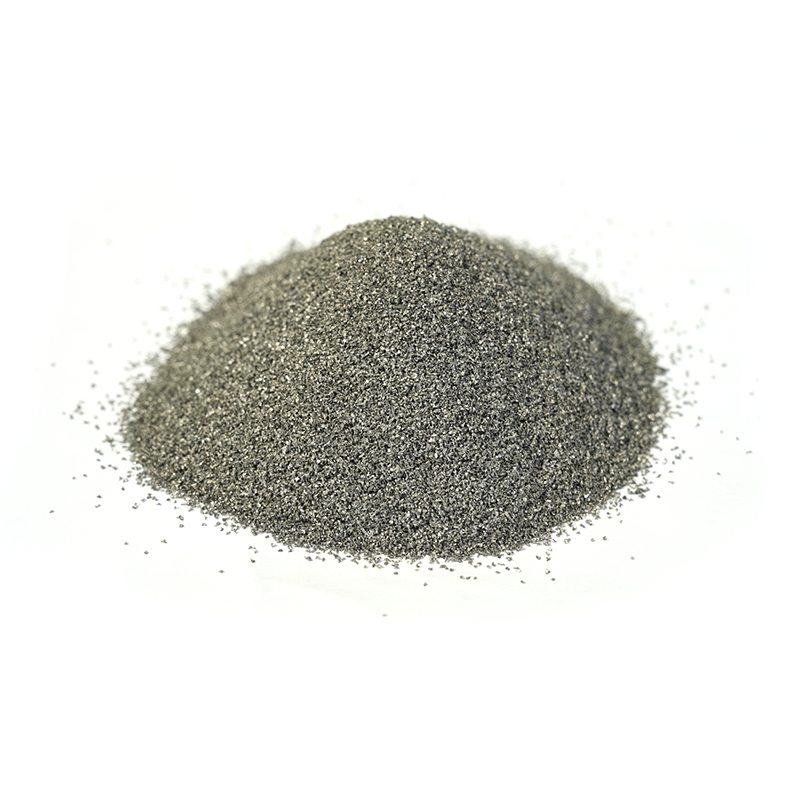
Sponge iron powder — produced by the solid-state reduction of iron ore or mill scale with hydrogen or carbon monoxide at temperatures below the melting point of iron — is a major production route for high-purity iron powder used in PM parts. The reduction process produces a porous, sponge-like particle structure with a characteristic irregular morphology and high surface area. Sponge iron powder has excellent compressibility — the porous particles deform readily under compaction pressure — and good green strength, making it well-suited to conventional die pressing for structural PM parts. The high surface area also makes sponge iron powders reactive toward sintering, contributing to good diffusion bonding between particles during the sintering cycle. The main limitation is the irregular particle shape and porosity, which limit apparent density and flowability compared to atomised powders.
Carbonyl process
Carbonyl iron powder (CIP) is produced by the thermal decomposition of iron pentacarbonyl — a volatile liquid compound formed by reacting iron with carbon monoxide under pressure — which deposits pure iron powder with extremely fine particle sizes, typically in the range of 1 to 10 micrometres. The resulting powder particles are nearly perfect spheres with very high purity (typically >99.5% Fe) and a characteristic onion-skin internal microstructure of concentric shells. Carbonyl iron powder is used in applications requiring very fine particle sizes and high purity — including metal injection moulding of very small components, magnetic core applications, and as a reference material for powder characterisation. It is not used in conventional press-and-sinter PM because the fine particle size makes die filling and handling impractical at large scale.
Principal Iron Based Alloy Powder Systems and Their Properties
Iron based alloy powders span a wide compositional range. The choice of alloying elements and their concentrations determines the mechanical properties achievable after sintering, the hardenability of the sintered part, and the corrosion and wear resistance of the finished component. The main alloy systems in commercial use each have distinct characteristics and application profiles.
| Alloy system | Key alloying elements | Typical sintered UTS | Primary applications | Key advantage |
| Pure iron / Fe-C | C (0.2 – 0.8%) | 300 – 550 MPa | Low-stress structural parts, magnetic cores | Low cost, high compressibility |
| Fe-Cu-C | Cu (1–3%), C (0.4–0.8%) | 450 – 700 MPa | Gears, bearings, bushings | Good strength at low alloying cost |
| Fe-Ni-Mo-C | Ni (1–4%), Mo (0.5–1%), C | 600 – 1,000 MPa | Automotive structural, connecting rods | High hardenability, good fatigue resistance |
| Stainless steel (316L, 17-4PH) | Cr (16–18%), Ni (10–14%), Mo | 480 – 1,100 MPa | Medical, food processing, AM parts | Excellent corrosion resistance |
| Tool steel (M2, H13) | W, Mo, Cr, V, C (various) | 1,500 – 2,500 MPa (hardened) | Cutting tools, dies, wear parts | Extreme hardness and wear resistance |
| Fe-Si soft magnetic | Si (3–6.5%) | 200 – 400 MPa | Motor cores, transformer cores, inductors | Low core loss, high permeability |
The Fe-Ni-Mo-C system deserves particular attention as it represents the performance benchmark for high-strength conventional PM parts. Diffusion-alloyed powders in this system — such as Höganäs Distaloy grades — pre-alloy or partially alloy the nickel and molybdenum onto the iron powder surface during production, achieving a compromise between the compressibility of elemental iron powder and the hardenability of fully pre-alloyed powder. The resulting sintered parts after heat treatment can achieve tensile strengths above 1,000 MPa with good fatigue resistance, enabling PM components to substitute for forged steel in demanding automotive structural applications including connecting rods, transmission gears, and valve train components.
Particle Characteristics and Why They Matter
The physical characteristics of iron based alloy powder particles — independent of their chemical composition — fundamentally determine how the powder behaves during processing. Two powders with identical alloy chemistry but different particle characteristics can produce dramatically different results in compaction, sintering, or additive manufacturing. The following particle parameters are the most important to understand and specify.
Particle size distribution (PSD)
Particle size distribution describes the range of particle sizes present in the powder, typically expressed as D10, D50, and D90 values — the diameters below which 10%, 50%, and 90% of the particle volume falls respectively. For conventional PM press-and-sinter, powder with a D50 in the range of 60 to 100 micrometres and a broad distribution provides good die filling, compaction behaviour, and sintering reactivity. For metal injection moulding, much finer powders are required — D50 of 5 to 15 micrometres — to allow the high packing densities needed in the MIM feedstock and to achieve the fine-grained microstructure needed in small, complex MIM parts. For laser powder bed fusion AM, a tightly controlled distribution with D50 typically in the 25 to 45 micrometre range and sharp cut-offs at both ends is required for consistent powder bed density and reliable recoating without segregation or agglomeration.
Particle morphology
Particle shape — described qualitatively as spherical, irregular, angular, or dendritic, or quantitatively by aspect ratio and circularity measurements — affects powder flowability, apparent density, tap density, and compressibility. Spherical particles flow more freely, pack to higher apparent and tap densities, and are essential for processes that depend on gravity-fed or auger-fed powder deposition such as AM powder bed systems. Irregular particles interlock during compaction and provide higher green strength in die-pressed compacts, making them preferable for conventional PM despite their lower flow and packing performance. The correct particle morphology depends entirely on the downstream process — there is no universally optimal particle shape.
Apparent density and flowability
Apparent density — the mass per unit volume of loosely poured powder measured by Hall flowmeter funnel fill according to ISO 3923 or ASTM B212 — is a practical indicator of how much powder a given die volume will contain and affects the compaction ratio needed to achieve the target green density. Flowability — measured as the time for 50g of powder to flow through a standardised orifice, or as the angle of repose — determines how reliably the powder feeds into die cavities during high-speed compaction. Both properties are influenced by particle size, shape, and surface condition. Lubricant addition — typically zinc stearate or amide wax at 0.5 to 1.0% by weight — is used in conventional PM powder mixes to improve flowability and reduce die wall friction during ejection.
Oxygen content and surface chemistry
Iron powder surfaces oxidise readily in air, forming thin iron oxide layers that affect sintering behaviour — oxide layers must be reduced during sintering for metallurgical bonding between particles to occur. The oxygen content of iron based alloy powder is a critical quality parameter, typically specified at below 0.2% by weight for conventional PM powder and below 0.05% for gas-atomised AM powder grades where residual oxide inclusions in the sintered microstructure are particularly detrimental to fatigue performance. Water-atomised powders have inherently higher oxygen content than gas-atomised equivalents due to the oxidising environment of the water atomisation process. Subsequent annealing in hydrogen reduces surface oxides and improves compressibility and sinterability, and is a standard production step for premium PM grades.

Applications of Iron Based Alloy Powder Across Industries
Iron based alloy powder is consumed across a remarkably diverse range of industrial applications, each exploiting different aspects of the material's properties and the specific capabilities of the manufacturing processes used with it.
Automotive powder metallurgy components
The automotive industry is the largest single consumer of iron based alloy powder, accounting for approximately 70% of total PM ferrous powder consumption globally. Press-and-sinter PM using water-atomised Fe-Cu-C and Fe-Ni-Mo-C powders produces a vast range of automotive structural components — transmission gears, sprockets, timing components, connecting rods, valve seats, oil pump rotors, and anti-lock braking system (ABS) sensor rings among them. The economic case for PM in automotive applications rests on the combination of net-shape capability (eliminating machining operations that represent significant cost in forged or cast parts), material efficiency (minimal scrap compared to machining), and the ability to achieve consistent tight tolerances in high-volume production. A single high-volume automotive PM part program may consume thousands of tonnes of iron based powder per year from a dedicated press-and-sinter line.
Additive manufacturing of iron based alloys
Gas-atomised iron based alloy powders — particularly 316L stainless steel, 17-4PH stainless steel, tool steel grades including M2 and H13, and maraging steel 300 — are among the most widely used feedstocks for metal additive manufacturing by laser powder bed fusion. The ability to produce highly complex geometries without tooling makes AM economically attractive for low-volume, high-value parts including surgical instruments, orthopaedic implants, aerospace structural brackets, injection mould tooling with conformal cooling channels, and customised industrial components. The powder requirements for AM are significantly more demanding than for conventional PM — spherical morphology, tight PSD control, low oxygen and nitrogen content, absence of satellite particles and agglomerates — and correspondingly more expensive, with AM-grade gas-atomised stainless steel powder typically priced 5 to 15 times higher than equivalent water-atomised PM grades.
Thermal spray coatings
Iron based alloy powders including Fe-Cr-C wear-resistant alloys, Fe-Ni corrosion-resistant alloys, and various stainless steel grades are extensively used as feedstock for thermal spray coating processes — high-velocity oxygen fuel (HVOF), plasma spray, and arc spray — to restore worn components, apply hard-facing to high-wear surfaces, and provide corrosion-resistant coatings on industrial equipment. Thermal spray powders for HVOF require carefully controlled spherical morphology and a narrow particle size distribution (typically 15 to 45 or 20 to 53 micrometres) for consistent feed rate and melting behaviour in the spray gun. The wear resistance of iron-based thermal spray coatings — particularly Fe-Cr-C and iron-based amorphous alloy coatings — can approach or exceed that of tungsten carbide-cobalt systems at significantly lower material cost.
Soft magnetic composite materials
Fe-Si alloy powders and electrically insulated pure iron powders are used to produce soft magnetic composite (SMC) components — press-formed magnetic cores used in electric motors, transformers, inductors, and electromagnetic actuators. Unlike laminated silicon steel, which constrains core geometry to two-dimensional lamination stacks, SMC allows three-dimensional flux path designs that enable more compact and efficient motor geometries. The performance of SMC cores — characterised by core loss at operating frequency, maximum flux density, and permeability — depends critically on the insulating coating integrity on the powder particles, the compaction density achieved, and the post-compaction heat treatment used to relieve compaction stresses and improve magnetic properties. Growing demand for electric vehicle motors and industrial drives is driving significant investment in SMC material and process development.
Sintering of Iron Based Alloy Powder: What Happens and What Controls the Outcome
Sintering — the thermal treatment that transforms a compacted powder mass into a coherent structural material through solid-state diffusion and neck formation between particles — is the defining process step that determines the final properties of PM components made from iron based alloy powder. Understanding the sintering process helps with selecting appropriate alloy systems and specifying sintering conditions.
Conventional sintering of iron based PM parts takes place at temperatures of 1,100 to 1,300°C in a controlled atmosphere — typically endothermic gas, dissociated ammonia, or hydrogen-nitrogen mixtures — that reduces surface oxides on the powder particles, allowing clean iron-to-iron contact at particle interfaces where diffusion bonding occurs. During sintering, several simultaneous processes occur: oxide reduction, neck growth between particles, pore rounding and shrinkage, carbon distribution from graphite additions to form iron-carbon solid solutions, and alloying element diffusion from pre-alloyed or diffusion-bonded additions. The sintered microstructure — grain size, porosity level and distribution, phase constitution, and homogeneity of alloying elements — determines the final mechanical properties of the part.
High-temperature sintering above 1,200°C significantly improves mechanical properties compared to conventional sintering at 1,120°C by enhancing alloying element homogenisation, reducing residual porosity, and improving diffusion bonding quality. The improvement in tensile strength, fatigue strength, and impact energy can be 20 to 40% relative to conventionally sintered equivalents. The higher capital cost of high-temperature sintering furnaces and increased energy consumption must be weighed against these property improvements for each application.
Quality Parameters to Specify When Sourcing Iron Based Alloy Powder
Specifying iron based alloy powder correctly for a given application requires defining both the chemical and physical characteristics that are critical for the downstream process. The following parameters should be confirmed and documented for any production-grade ferrous powder procurement:
- Chemical composition and certification: Specify the target composition for all major and minor alloying elements with acceptable tolerance ranges, and require batch-traceable chemical analysis certificates (typically by ICP-OES or X-ray fluorescence) for every delivered lot. For stainless steel and tool steel grades, confirm compliance with relevant international alloy designations (AISI, EN, JIS) and verify that the supplier's composition specification aligns with the intended sintering and heat treatment process.
- Particle size distribution: Specify D10, D50, and D90 values with acceptable ranges matched to the downstream process — conventional PM, AM, MIM, or thermal spray — and require laser diffraction or sieve analysis data on each lot. For AM applications, additionally specify maximum particle size (Dmax) to prevent oversize particles that cause recoater damage or layer defects.
- Apparent density and flow rate: Specify minimum acceptable apparent density (ASTM B212 or ISO 3923) and maximum acceptable flow time (ASTM B213 or ISO 4490) appropriate for your compaction equipment and production speed requirements. Changes in apparent density between lots affect the compaction ratio and can shift finished part density outside specification.
- Oxygen and carbon content: Specify maximum oxygen content appropriate to the application — typically 0.15 to 0.25% for conventional PM water-atomised powder, below 0.05% for AM gas-atomised grades. For Fe-C alloys, specify both total carbon and free carbon (graphite) separately where both are present in premixed grades.
- Morphology documentation: For AM and thermal spray grades where particle shape critically affects process performance, request SEM (scanning electron microscope) images from each production lot to confirm sphericity, absence of satellite particles, and absence of hollow particles. Satellite particles — small particles fused to larger ones during atomisation — disrupt powder bed layer quality in AM and can cause spitting defects in thermal spray.
- Compressibility testing for PM grades: For conventional die-press PM grades, specify minimum green density at a defined compaction pressure (typically expressed as g/cm³ at 600 MPa compaction) measured by ASTM B331 or equivalent. Compressibility directly affects achievable sintered density and is sensitive to oxygen content, particle hardness, and lubricant addition level.
- Lot traceability and shelf life: Confirm that the supplier's production and quality system provides full lot traceability from raw material through atomisation, post-processing, and packaging. Establish the recommended storage conditions — sealed containers under inert gas or dry air, maximum storage temperature — and shelf life before re-testing is required. Iron based powders are susceptible to oxidation and moisture absorption if improperly stored, particularly for fine particle sizes with high surface area.
Handling and Safety Considerations for Iron Based Alloy Powders
Iron based alloy powders present specific safety and handling hazards that require appropriate controls in production environments. The hazards vary with particle size and alloy composition, but the following considerations apply broadly across ferrous powder handling operations.
- Dust explosion risk: Fine iron powder — particularly particles below 63 micrometres — is combustible and can form explosive dust clouds when dispersed in air at concentrations above the minimum explosive concentration (MEC). The MEC for iron powder is approximately 120 g/m³, with Kst values (dust explosion severity index) typically in the St1 class (weak explosion). Dust extraction systems, explosion-proof electrical equipment, earthing to prevent static charge accumulation, and avoidance of ignition sources are standard requirements in iron powder handling areas. ATEX zoning assessments should be conducted for facilities handling significant quantities of fine ferrous powder.
- Inhalation hazard: Chronic inhalation of iron oxide and metallic iron dust can cause siderosis — iron dust deposition in lung tissue — and respiratory irritation. Respirators rated for metal dust (minimum P2/N95), local exhaust ventilation at powder handling points, and regular respiratory health surveillance for exposed workers are appropriate controls. Some iron alloy powders containing chromium, nickel, or cobalt present additional carcinogenic inhalation risks and require more stringent controls than pure iron powder.
- Pyrophoric risk for very fine grades: Extremely fine iron powder below approximately 10 micrometres can be pyrophoric — capable of spontaneous ignition in air — particularly if freshly produced with a clean metallic surface and low oxide passivation layer. Carbonyl iron powder and very fine gas-atomised grades must be handled with particular care, stored under inert atmosphere, and introduced to air gradually to allow controlled surface passivation before open handling.
- Moisture and oxidation control in storage: Iron based powders must be stored in sealed containers in a dry environment to prevent oxidation and moisture absorption that degrade compressibility and sintering performance. Containers should be purged with dry nitrogen before sealing for long-term storage, and opened containers should be resealed promptly after use. First-in, first-out inventory management minimises the risk of using aged powder that has oxidised beyond specification.